
What's Happening?
The American Israel Public Affairs Committee (AIPAC) and its affiliated 'super PAC,' the United Democracy Project (UDP), have spent a record $54 million on congressional races in the current US midterm
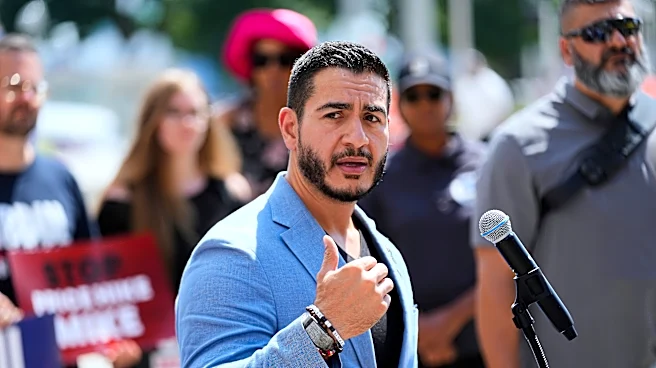
election cycle, making UDP the largest outside spender. The broader pro-Israel donor network has contributed $71 million, second only to the cryptocurrency industry. This significant financial investment aims to support candidates committed to Israel and defeat critics of unconditional US military aid, primarily in Democratic primaries. Despite this record spending, AIPAC-backed candidates have faced setbacks, including an unsuccessful $30 million effort in Michigan to prevent Abdul El-Sayed from winning the Democratic Senate nomination. Progressive candidates in California, Illinois, and New York have also defeated AIPAC-supported opponents, often making the group's spending a campaign issue. Unease about AIPAC's influence is spreading beyond Democrats, with allies of Republican Senate nominee Mike Rogers in Michigan reportedly asking AIPAC not to run ads on his behalf, fearing it would benefit El-Sayed in the Arab-American heartland.
Why It's Important?
The unprecedented spending by the pro-Israel lobby in US midterm elections underscores the enduring influence of special interest groups in American politics, particularly concerning foreign policy. This financial power, however, is increasingly met with resistance and a shifting public opinion. A June Quinnipiac University poll revealed that 48% of American voters, including 66% of Democrats, believe Washington is too supportive of Israel, marking the highest figure in nine years. This growing discomfort, especially within the Democratic party and among 'America First' conservatives, suggests that a once-prized endorsement from AIPAC can now be a liability for some candidates. The ability of progressive candidates to overcome significant financial disadvantages against AIPAC-backed opponents indicates a potential re-evaluation of the effectiveness of large-scale campaign spending in shaping electoral outcomes, particularly when it clashes with evolving voter sentiments on foreign policy and the role of money in politics.
What's Next?
The growing backlash against AIPAC's spending and influence suggests that future election cycles may see continued challenges to its traditional political power. Candidates, particularly those on the progressive left, are likely to continue using AIPAC's financial contributions as a campaign issue, framing it as an example of big-money interests overriding ordinary voters. This could lead to a more nuanced approach by candidates in accepting or publicly acknowledging pro-Israel endorsements. While AIPAC's financial strength and political power remain formidable, as evidenced by continued broad support for US military aid to Israel in Congress, the recent electoral setbacks indicate that money alone cannot guarantee victory. The evolving public sentiment and the increasing willingness of candidates to criticize the lobby could prompt AIPAC to adapt its strategies or face diminishing returns on its investments in certain races. The debate over US foreign policy towards Israel and the role of lobbying groups is likely to intensify, influencing future legislative decisions and electoral dynamics.
Beyond the Headlines
The shifting attitudes towards Israel and the pro-Israel lobby in the US reflect broader changes in American political discourse and foreign policy priorities. The rise of progressive movements within the Democratic Party, coupled with a segment of the 'America First' conservative movement, is challenging long-held bipartisan consensus on US-Israel relations. This dynamic is not just about specific policies but also about the perceived influence of foreign interests in domestic politics and the allocation of resources. The debate over US support for Israel is becoming intertwined with broader discussions about campaign finance reform, the role of PACs, and the accountability of elected officials to their constituents versus powerful lobbying groups. This could lead to a re-evaluation of the US's strategic interests in the Middle East and a potential recalibration of its foreign aid policies, impacting not only Israel but also other allies and adversaries in the region. The long-term implications could include a more isolationist or domestically focused foreign policy, or a more critical and conditional approach to international alliances.