
What's Happening?
President Donald Trump has approved a significant arms sale to Taiwan, marking one of the largest U.S. arms deals with the island. This decision underscores the ongoing U.S. commitment to Taiwan's security
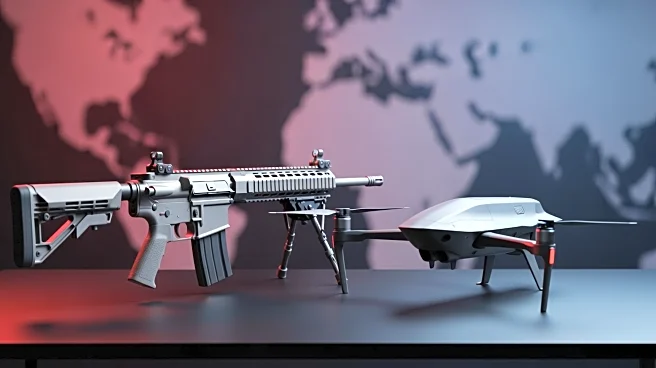
despite a recent thaw in U.S.-China relations. The arms package, valued at up to $11.1 billion, includes advanced weaponry such as High Mobility Artillery Rocket Systems (HIMARS), self-propelled howitzers, Javelin anti-tank missile systems, and 'suicide drones'. This move comes as Taiwan seeks to bolster its defenses against potential Chinese aggression, with China viewing Taiwan as a breakaway province. The sale is conducted under the Taiwan Relations Act of 1979, which allows the U.S. to provide Taiwan with defensive arms.
Why It's Important?
The arms sale is significant as it highlights the strategic importance of Taiwan in U.S. foreign policy, particularly in the context of U.S.-China relations. By approving this sale, the U.S. is reinforcing its support for Taiwan's self-defense capabilities, which could deter potential Chinese military actions. This decision may strain U.S.-China relations further, as China has consistently opposed U.S. arms sales to Taiwan, viewing them as a violation of its sovereignty. The sale also reflects the broader geopolitical tensions in the Asia-Pacific region, where Taiwan plays a critical role in the balance of power.
What's Next?
The approval of this arms sale could lead to increased diplomatic tensions between the U.S. and China. China has already expressed strong opposition, stating that the sale undermines its sovereignty and disrupts regional stability. In response, China may increase its military presence or conduct more military exercises near Taiwan. The U.S. will likely continue to monitor the situation closely, balancing its commitments to Taiwan with the broader implications for U.S.-China relations. Additionally, Taiwan will proceed with integrating these new weapons systems into its defense strategy.