



What's Happening?
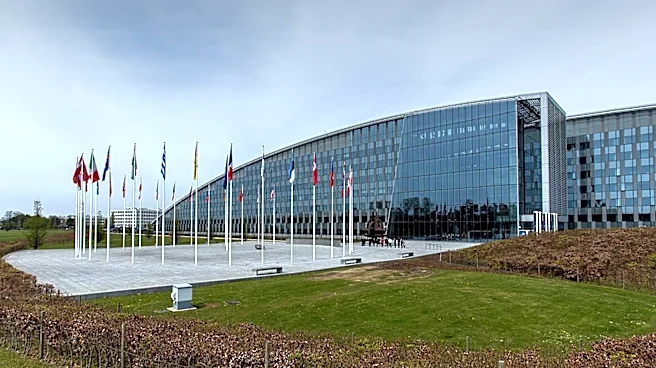
On August 27, while addressing questions in the Oval Office, President Trump dismissed assertions that Russian President Vladimir Putin intends to attack a NATO territory. President Trump's statement directly contradicted concerns raised by some officials
and analysts regarding potential Russian aggression towards NATO member states. His remarks were made during a period of ongoing geopolitical tensions and discussions surrounding international security alliances. The President's stance suggests a different assessment of Russia's immediate intentions compared to those who have voiced apprehension about the security of NATO's eastern flank. This declaration from the President provides a clear perspective from the U.S. executive branch on the perceived threat level from Russia concerning NATO's collective defense.
Why It's Important?
President Trump's rejection of claims regarding a potential Russian attack on NATO territory carries significant implications for U.S. foreign policy and international relations. NATO's Article 5, which mandates collective defense, is a cornerstone of the alliance, and any perceived threat to a member state is taken seriously by all allies. The President's statement could be interpreted in various ways by both allies and adversaries. It might reassure some that the U.S. does not foresee an immediate military confrontation with Russia over NATO territory, potentially de-escalating rhetoric. Conversely, it could raise concerns among other NATO members who view Russia as a more direct and imminent threat, potentially leading to questions about the U.S. commitment to collective defense or its assessment of intelligence. This position also influences global perceptions of U.S. leadership and its approach to managing international security challenges, particularly in Eastern Europe.
What's Next?
Following President Trump's statement, it is likely that international discussions and diplomatic efforts will continue to focus on the security of NATO member states and Russia's role in regional stability. Other NATO leaders and defense officials may offer their own assessments of the threat landscape, potentially aligning with or diverging from President Trump's view. The U.S. Department of Defense and intelligence agencies may continue to monitor Russian military activities and provide their analyses, which could either reinforce or challenge the President's assertion. Future diplomatic engagements between the U.S. and Russia, as well as within NATO, will likely address these differing perspectives on security threats. The statement could also influence defense spending and strategic planning among NATO allies, as they weigh the perceived level of threat against their own national security interests and alliance commitments.
Beyond the Headlines
President Trump's remarks delve into the deeper complexities of alliance dynamics and the interpretation of intelligence in foreign policy. His direct dismissal of a widely discussed threat highlights the potential for differing perspectives within an alliance, even at the highest levels of leadership. This situation could prompt a broader examination of how intelligence is assessed and communicated, and how political leaders choose to frame perceived threats to the public and international partners. It also touches upon the ongoing debate about the purpose and relevance of NATO in the 21st century, particularly in the context of evolving geopolitical landscapes and the rise of new global powers. The President's statement may also influence public opinion on foreign policy and defense spending, as citizens grapple with conflicting narratives about international security and the role of the U.S. in global affairs.