



What's Happening?
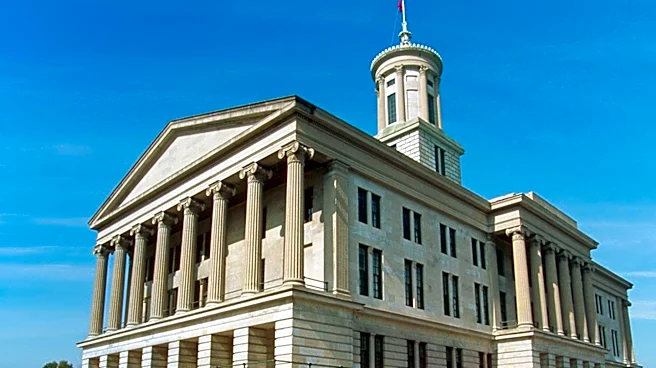
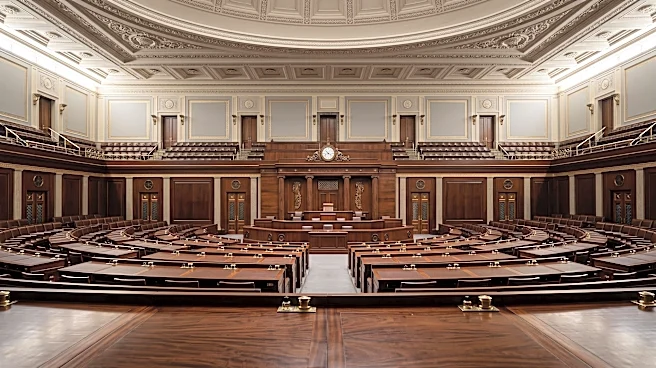
The state of Tennessee has enacted a new law prohibiting the injection, release, or intentional dispersion of chemical products or devices into the atmosphere for the express purpose of affecting temperature. The bill, which was adopted by the Senate,
passed the House of Representatives, and was signed by Governor Bill Lee on April 11, 2024, became effective on July 1, 2024. Although the term 'chemtrails' is not explicitly mentioned in the legislation, the law appears to directly address this alleged phenomenon. Supporters of the measure, including controversial figures like Alexander Emerick Jones, have publicly stated their desire to end 'chemtrails' and solar geoengineering. The 'chemtrails' theory is a conspiracy theory asserting that aircraft trails consist of chemical or biological agents deliberately dispersed by government agencies to modify the climate, often linked to solar geoengineering concepts. The scientific community overwhelmingly rejects this theory, explaining that these trails are contrails, which are condensation trails primarily composed of water vapor, carbon, and other fuel combustion residues.
Why It's Important?
This new law in Tennessee is significant because it reflects the growing influence of conspiracy theories on public policy and legislative action within the United States. By enacting legislation that implicitly validates a widely debunked conspiracy theory, the state government risks undermining scientific consensus and potentially setting a precedent for other states to legislate based on unsubstantiated claims. The law could also create confusion regarding legitimate atmospheric research or weather modification efforts, even if those are not its direct target. The involvement of figures like Alexander Emerick Jones in advocating for such legislation highlights how fringe beliefs can penetrate mainstream political discourse and influence lawmakers. This development underscores a broader societal challenge in distinguishing scientific fact from misinformation, particularly in areas related to climate and environmental science.
What's Next?
The implementation of this law in Tennessee could lead to several foreseeable consequences. It may embolden proponents of the 'chemtrails' conspiracy theory, potentially leading to similar legislative efforts in other states. Conversely, it could prompt scientific organizations and climate experts to increase their public education efforts to counter misinformation about atmospheric phenomena and geoengineering. The law might also face legal challenges if it is perceived to impede legitimate scientific research or if its enforcement is seen as arbitrary. Furthermore, the passage of such a law could influence public perception of climate science and geoengineering technologies, potentially hindering future discussions or research into climate change mitigation strategies that involve atmospheric interventions, even those based on sound scientific principles. The broader impact on public trust in scientific institutions and government agencies remains a key area to watch.
Beyond the Headlines
The Tennessee law banning atmospheric releases to affect temperature delves into deeper implications concerning the intersection of public policy, scientific literacy, and the spread of misinformation. Ethically, legislating based on conspiracy theories raises questions about the responsibility of lawmakers to uphold evidence-based decision-making. Legally, the vagueness of terms like 'affecting temperature' could lead to challenges in interpretation and enforcement, potentially impacting legitimate atmospheric research or even commercial activities that inadvertently alter local atmospheric conditions. Culturally, this law signifies a growing divide between scientific understanding and public belief, fueled by online echo chambers and distrust in established institutions. It highlights a long-term shift where fringe narratives can gain enough traction to influence state-level governance, posing a challenge to rational policy-making and potentially eroding the public's ability to discern credible information from disinformation, especially in complex scientific domains like climate science and geoengineering.