
What's Happening?
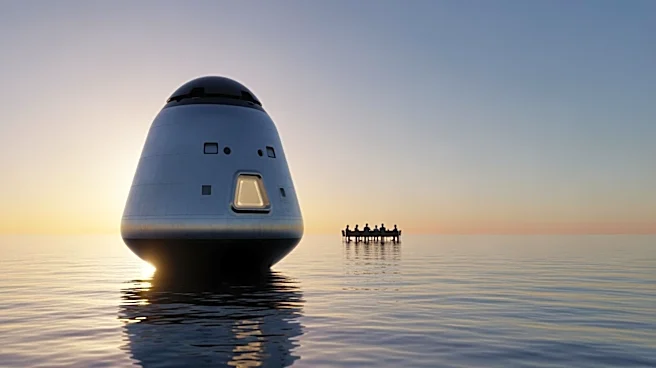
The NASA Artemis II mission has successfully concluded with the Orion spacecraft's splashdown in the Pacific Ocean on April 10, 2026. The mission involved a nine-day journey, including a historic lunar
flyby where astronauts traveled farther from Earth than any humans since the Apollo era. The mission did not include a lunar landing but served as a critical technical bridge toward future missions. The Orion capsule faced extreme thermal stress during re-entry, with temperatures reaching 2,750°C, and successfully demonstrated the performance of its heatshield and deep-space navigation systems.
Why It's Important?
The Artemis II mission marks a pivotal moment in modern spaceflight, demonstrating the capability to carry humans back to the Moon after more than 50 years. It validates the Artemis program's architecture, including the Orion spacecraft and launch systems, for future crewed lunar missions. The mission's success is crucial for advancing human deep-space exploration capabilities and positions the United States at the forefront of lunar exploration. It also highlights international collaboration, with contributions from partners like the European Space Agency and the Canadian Space Agency.
What's Next?
Following the success of Artemis II, NASA is focusing on the Artemis III mission, which will test lunar lander docking in Earth orbit. Artemis IV is now considered the first realistic lunar landing target, planned for around 2028. The long-term goal includes establishing a permanent lunar base. NASA is addressing technical challenges, such as the helium leak in Orion's propulsion system, to ensure the reliability of future missions. The success of Artemis II sets the stage for continued advancements in lunar exploration and potential competition from other spacefaring nations.