

What's Happening?
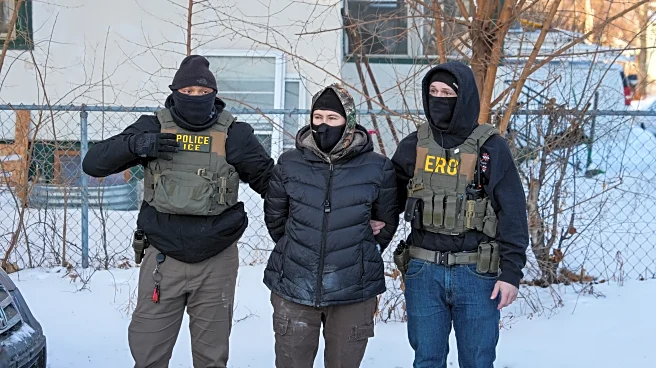
A federal judge in Minnesota has issued a temporary order restricting federal immigration agents from retaliating against peaceful protesters and observers during the Department of Homeland Security's Operation Metro Surge. The ruling by U.S. District
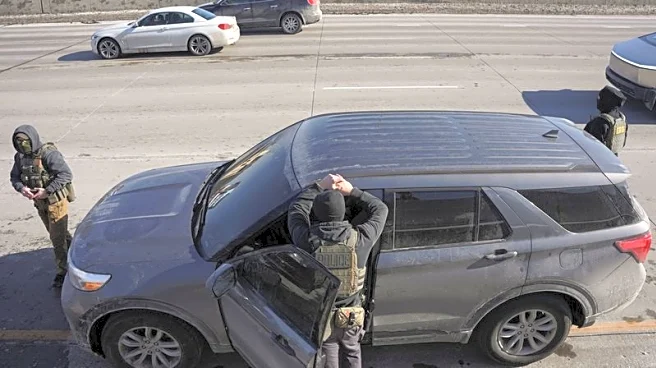
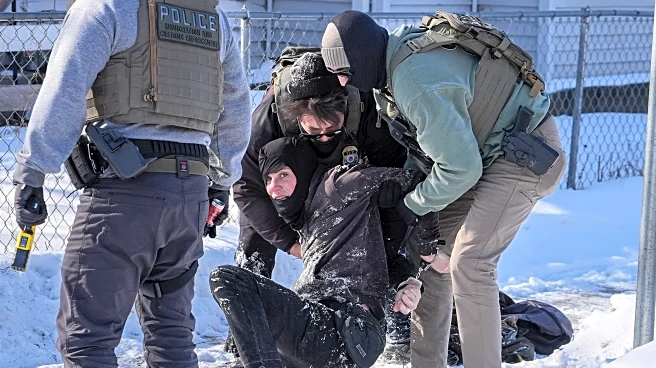
Judge Katherine Menendez prohibits federal agents from arresting or detaining individuals engaged in lawful protest without probable cause or reasonable suspicion of criminal activity. The order also limits Immigration and Customs Enforcement (ICE) and other federal agents from stopping vehicles unless there is reasonable suspicion of obstruction. The American Civil Liberties Union (ACLU) filed the lawsuit leading to this ruling, citing instances where protesters were allegedly arrested for lawful activities. Federal officials have contested these claims, arguing that force was only used when necessary for safety.
Why It's Important?
This ruling is significant as it addresses the balance between law enforcement operations and the protection of civil liberties. The decision underscores the judiciary's role in overseeing federal actions and ensuring that constitutional rights are upheld during enforcement operations. The ruling may impact how federal agencies conduct operations in protest-prone areas, potentially leading to changes in tactics to avoid legal challenges. It also highlights ongoing tensions between federal authorities and civil rights groups, with implications for future protests and law enforcement responses across the U.S.
What's Next?
The Department of Homeland Security is required to disseminate the judge's order to all agents in the area within 72 hours. This may lead to adjustments in how federal agents engage with protesters and observers. The ACLU and other civil rights organizations are likely to monitor compliance closely, potentially leading to further legal actions if violations occur. The ruling could also prompt discussions among policymakers and law enforcement agencies about the need for clearer guidelines and training to prevent similar legal challenges in the future.