







What's Happening?
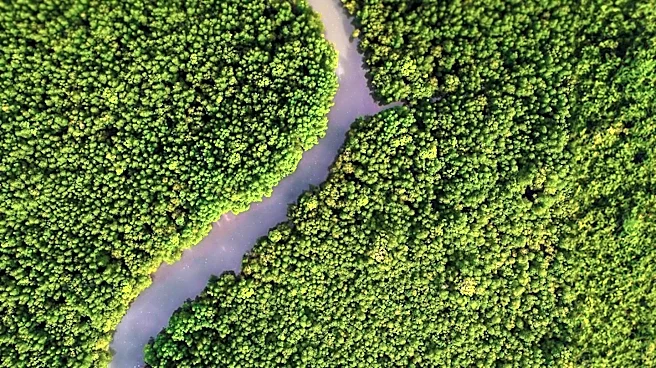
A study by Stanford University researchers, published in August 2025, challenges the long-held belief that plants are necessary for the formation of meandering rivers. Historically, it was thought that the presence of vegetation was crucial for stabilizing
riverbanks, allowing rivers to form their distinctive S-shaped meanders. However, the study suggests that meandering rivers existed long before plants colonized land. The research, which analyzed modern rivers, found that meanders can form in the absence of vegetation, as evidenced by satellite imagery of over 4,400 river bends. The study indicates that barren riverbanks can still support meandering channels, which may have been under-recognized in the geological record due to their resemblance to braided river deposits.
Why It's Important?
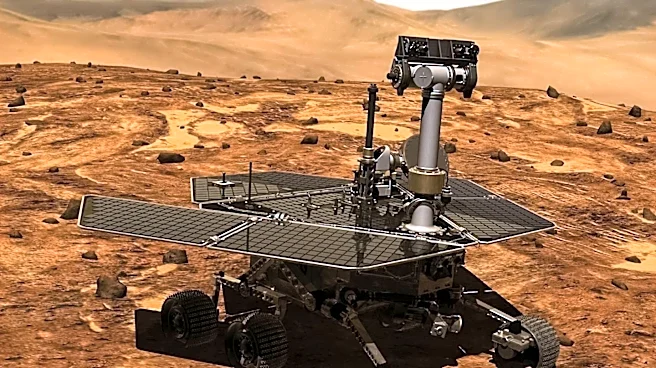
This study has significant implications for our understanding of Earth's geological history and the evolution of river systems. By suggesting that meandering rivers existed before the advent of land plants, it challenges the traditional narrative and prompts a reevaluation of ancient river deposits. This could lead to revised estimates of early sediment movement and carbon storage, impacting our understanding of ancient environments. Additionally, the findings have relevance for planetary geology, as they provide insights into the formation of sinuous channels on Mars, which lacks a history of rooted vegetation. The study also highlights the importance of reinterpreting geological records to better understand Earth's past landscapes.