




What's Happening?
Ukraine has imposed sanctions on the producers and distributors of the widely popular Russian animated series 'Masha and the Bear'. Ukrainian Culture Minister Tetyana Berezhna announced on X that President Volodymyr Zelenskyy signed a decree enacting
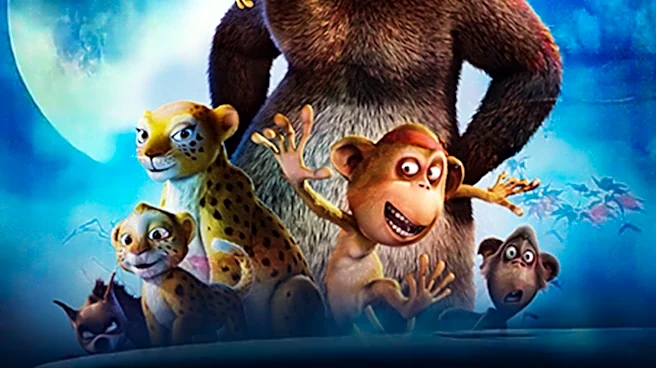
these sanctions, which target the show's creators, including its studio Animaccord. The Ukrainian government accuses the cartoon of spreading 'pro-Russian narratives' and posing a threat to Ukrainian national security. These sanctions establish legal grounds to block the content within Ukraine and aim to engage international platforms to restrict its monetization and distribution. The series, which depicts a mischievous girl named Masha and her friend, a retired circus bear, has garnered over 37 billion views on its YouTube channel and is broadcast in approximately 100 countries. The move follows ongoing criticism from Ukraine and its allies, such as the United Kingdom and Estonia, who view the cartoon as an instrument of Russia's soft power. Russia has dismissed these allegations, with Kremlin spokesman Dmitry Peskov stating that the cartoon promotes 'the finest human qualities' and has 'conquered the world'.
Why It's Important?
This action by Ukraine underscores the broader conflict's impact on cultural products and highlights the increasing weaponization of soft power in international relations. By sanctioning a children's cartoon, Ukraine is signaling its commitment to combating perceived Russian influence across all sectors, including media consumed by its youngest citizens. This move could set a precedent for how nations address cultural content from adversarial states, potentially leading to more widespread scrutiny and restrictions on foreign media. For the entertainment industry, particularly those involved in international distribution, it raises questions about content neutrality and the political implications of seemingly innocuous programming. The decision also reflects a growing trend of cultural boycotts and official restrictions on Russian products in Ukraine since the 2022 invasion, further isolating Russian cultural exports and potentially impacting their global reach and revenue streams. The dispute over 'Masha and the Bear' illustrates how even children's entertainment can become a battleground in geopolitical conflicts, affecting both creators and audiences.
What's Next?
The sanctions are expected to lead to the blocking of 'Masha and the Bear' content within Ukraine and will likely prompt Ukrainian authorities to lobby international platforms to restrict its distribution and monetization globally. This could involve discussions with major streaming services and media companies regarding their licensing agreements and content policies. The Ukrainian government may also continue to monitor and potentially sanction other Russian cultural products deemed to spread 'pro-Russian propaganda.' Conversely, Russia is likely to continue defending its cultural exports, potentially seeking alternative distribution channels or rallying international support against what it may portray as censorship. The situation could also influence future content creation, with producers becoming more cautious about the geopolitical implications of their work. The ongoing conflict ensures that cultural products will remain under scrutiny, and further actions from both sides regarding media content are probable.
Beyond the Headlines
The sanctioning of 'Masha and the Bear' delves into the complex ethical and cultural dimensions of modern warfare, where the battle extends beyond physical territories to the realm of ideas and influence, even targeting children's media. This development highlights the concept of 'cultural warfare,' where symbols, narratives, and entertainment are used to shape public opinion and national identity. The accusation of 'soft power' being wielded through a children's cartoon raises questions about the subtle ways propaganda can be disseminated and absorbed, particularly by impressionable young audiences. It also forces a re-evaluation of what constitutes 'neutral' or 'innocent' content in a highly politicized global environment. The long-term implications could include a more fragmented global media landscape, where content is increasingly filtered through national security lenses, potentially limiting cultural exchange and fostering deeper divisions. This incident underscores the profound impact of geopolitical tensions on everyday life, transforming even a beloved children's show into a subject of international dispute and a casualty of conflict.