






What's Happening?
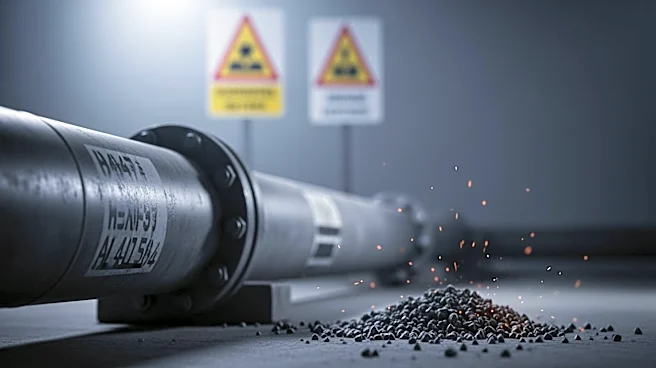
Serbian President Aleksandar Vučić has reported the discovery of explosives near a gas pipeline that connects Serbia and Hungary. The explosives were found inside backpacks in Kanjiza, northern Serbia, close to the Balkan Stream pipeline, which is an extension
of the TurkStream pipeline carrying Russian gas. Vučić informed Hungarian Prime Minister Viktor Orbán about the investigation's initial findings, prompting Orbán to convene an extraordinary defense council in Hungary. The motive behind placing the explosives remains unclear, with Vučić refraining from elaborating on certain traces found during the investigation. The incident occurs amid heightened concerns over gas pipeline security, following previous disputes involving the Soviet-era Druzhba pipeline, which carries Russian oil to Hungary and Slovakia.
Why It's Important?
The discovery of explosives near a critical gas pipeline raises significant concerns about energy security in the region. Serbia and Hungary rely heavily on Russian gas, and any disruption could have severe economic and political consequences. The timing of the incident, just days before Hungary's general election, adds a layer of political tension, with accusations of potential false-flag operations aimed at influencing the electoral outcome. Hungary's government has accused Ukraine of attempting to trigger an energy crisis, while opposition parties suggest that the government might be exaggerating the threat to gain electoral advantage. The situation underscores the geopolitical complexities surrounding energy infrastructure in Eastern Europe, where political and economic interests are deeply intertwined.
What's Next?
The investigation into the origin and intent behind the explosives is ongoing, with potential implications for regional security and political dynamics. Hungary's upcoming general election could be influenced by the incident, as energy security becomes a focal point in political discourse. The Hungarian government may increase security measures around critical infrastructure, while Serbia continues to navigate its dependency on Russian gas amid its EU candidacy. The broader geopolitical landscape may see increased scrutiny of energy infrastructure security, with potential diplomatic tensions arising from accusations of false-flag operations.
Beyond the Headlines
The incident highlights the vulnerability of energy infrastructure to sabotage and the potential for such events to be used as political tools. It raises ethical questions about the manipulation of security threats for electoral gain and the broader implications for regional stability. The reliance on Russian energy sources by non-EU countries like Serbia poses challenges for EU integration and energy independence. Long-term shifts may include increased investment in infrastructure security and diversification of energy sources to mitigate geopolitical risks.