








What's Happening?
The U.S. Department of Homeland Security (DHS) Science and Technology Directorate (S&T) is advancing its Integrated Disaster Resilience Program (IDR). This program focuses on enhancing the protection of life and property through research into new technologies,
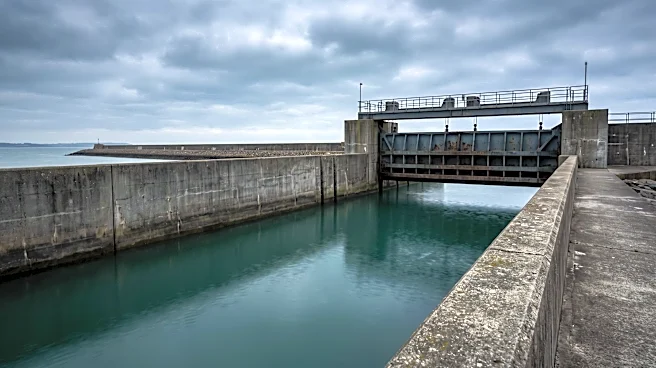
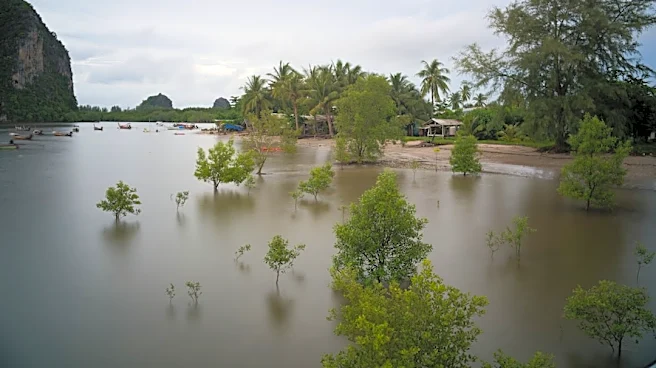
the development of standards and best practices, and improved information sharing capabilities. The IDR program aims to empower communities to bolster disaster resilience by adopting a systems-based approach to preparedness. This involves developing technologies for detecting and monitoring key threats, as well as improving the synthesis and sharing of critical information among federal, state, local, and private organizations. The program operates through four distinct project areas: Community Resilience Testbeds, Disaster Recovery, Flood, and Next Generation Disaster Proofing.
Why It's Important?
The IDR program is crucial for national security and public safety, as it directly addresses the increasing frequency and intensity of natural disasters and other threats. By investing in research and development, DHS S&T is working to provide communities with advanced tools and strategies to better prepare for, respond to, and recover from catastrophic events. This initiative has significant implications for infrastructure resilience, economic stability, and the well-being of U.S. citizens. Improved disaster resilience can reduce economic losses, minimize casualties, and accelerate recovery efforts, thereby strengthening national security. The collaborative approach, involving various levels of government and private organizations, ensures that solutions are comprehensive and widely applicable, benefiting a broad range of stakeholders.
What's Next?
The IDR program will continue its research and development efforts across its four project areas. This includes ongoing work in Community Resilience Testbeds, which likely involves real-world testing of new technologies and strategies. Further advancements are expected in Disaster Recovery, focusing on efficient post-event responses, and in Flood management, addressing one of the most common and destructive natural hazards. The Next Generation Disaster Proofing area suggests a forward-looking approach to developing innovative solutions for future threats. DHS S&T will also continue to foster partnerships with various organizations to facilitate the deployment of best practices and ensure effective information sharing, aiming for continuous improvement in national disaster preparedness and response capabilities.
Beyond the Headlines
The Integrated Disaster Resilience Program highlights a proactive shift in national security strategy, moving beyond reactive measures to emphasize preparedness and long-term resilience. This approach recognizes that the impact of disasters extends beyond immediate physical damage, affecting economic stability, social cohesion, and national security. The program's focus on technology and information sharing underscores the critical role of innovation in modern disaster management. Ethically, this involves ensuring equitable access to resilience resources across all communities, particularly those most vulnerable to disasters. Culturally, it promotes a societal shift towards a more resilient mindset, where preparedness is a collective responsibility. The long-term success of such initiatives could redefine the national approach to risk management and significantly enhance the country's ability to withstand future shocks.