

What's Happening?
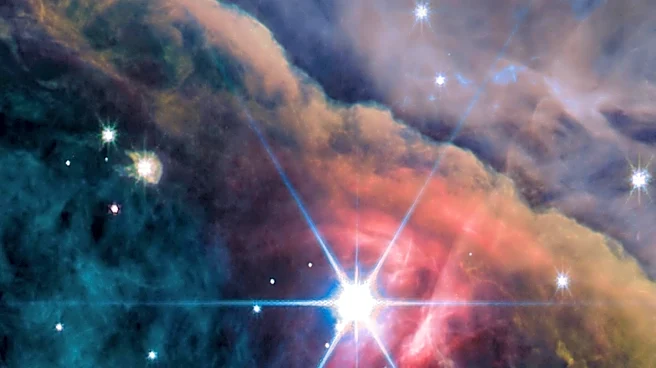
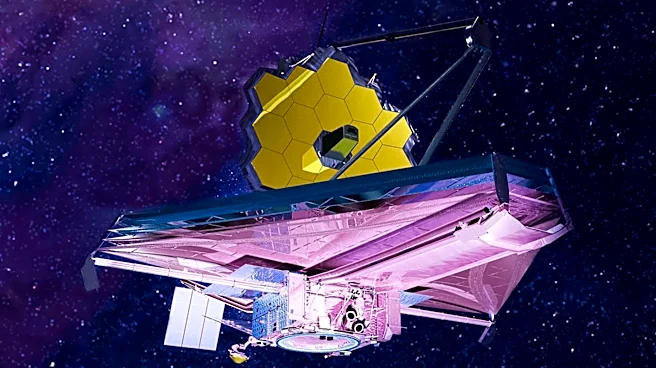
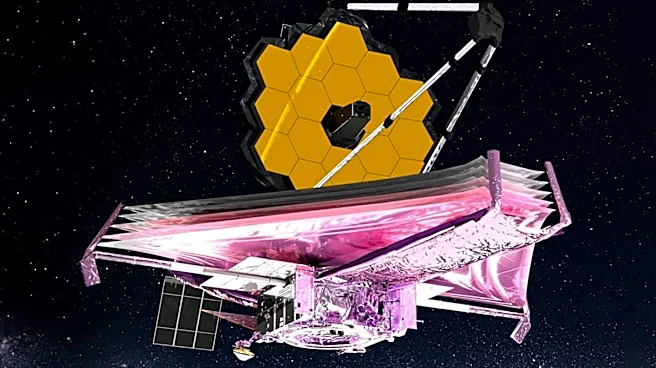
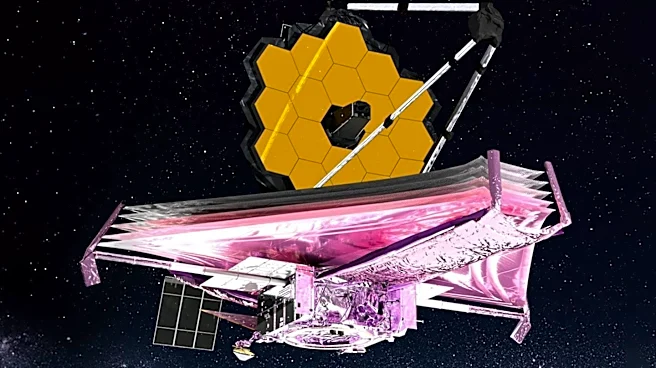
The James Webb Space Telescope (JWST) is enhancing the search for biosignatures in exoplanetary atmospheres by using transit spectroscopy to detect chemical disequilibrium. This method focuses on identifying gases like oxygen and methane, which on Earth
are indicators of life due to their rapid reaction and need for constant renewal. The JWST has begun examining the atmospheres of planets such as TRAPPIST-1 and K2-18b. While finding a biosignature does not confirm life, it marks the beginning of a long-term quest to explore the potential for life beyond Earth.
Why It's Important?
The ability to detect biosignatures on exoplanets could revolutionize our understanding of life in the universe. This research could lead to the discovery of life forms or conditions conducive to life on other planets, fundamentally altering our perception of Earth's uniqueness. The findings could also drive advancements in space exploration technologies and methodologies, influencing future missions and international collaborations in the field of astrobiology. The search for life beyond Earth is a profound scientific endeavor with implications for philosophy, science, and society.