







What's Happening?
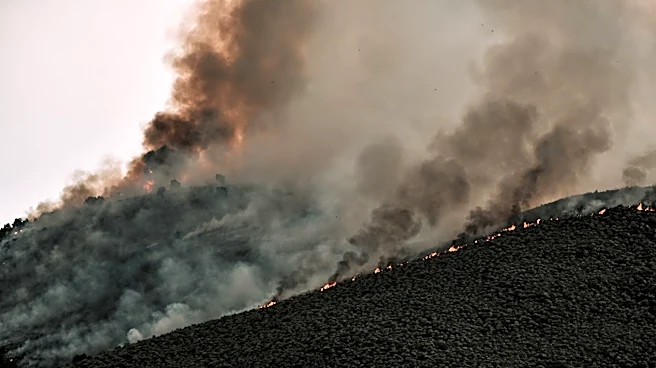
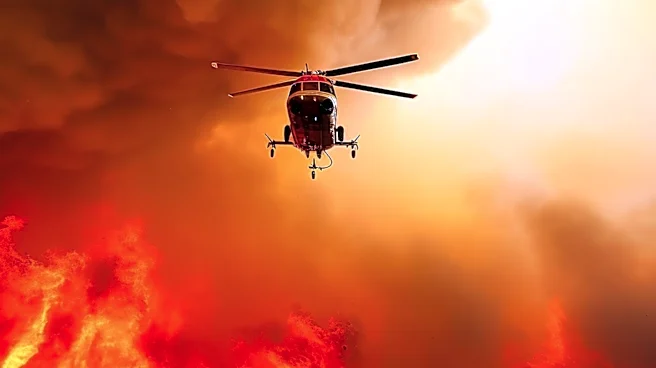
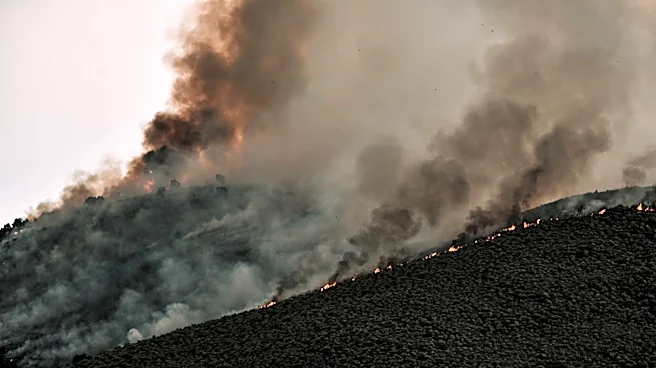
The Rowe Creek Complex fire, located 10 miles south of Fossil, Oregon, has reached 373,784 acres and is now 89% contained. Despite the high containment, 59 miles of fire lines remain uncontrolled. The fire, caused by lightning, is currently being managed
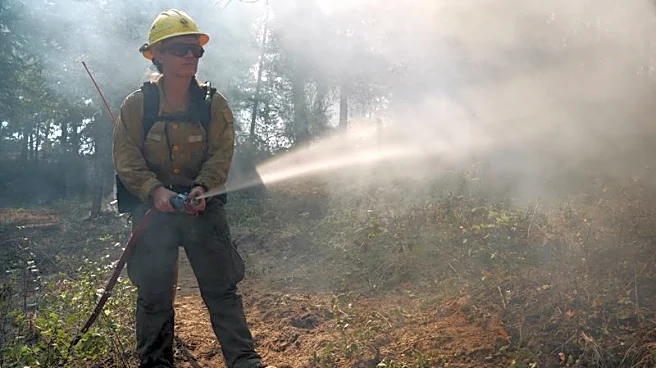
by 1,318 personnel. A significant operational change is underway as the Oregon Department of Forestry Complex Incident Management Team 2 (ODFCIMT2) is transitioning to take unified command from Southwest Complex Incident Management Team 2 (SWCIMT2). Crews are actively working to widen lines connecting Mill Creek and US 26, while also strengthening contingency lines as backup. Fuel removal operations continue along US 26, and structural protection teams are patrolling the Mill Creek area and conducting gridding searches on properties along Ranger Station Road. Crook County has reduced some evacuation statuses, leading to the closure of the Red Cross shelter in Prineville.
Why It's Important?
The Rowe Creek Complex fire's immense scale, covering over 373,000 acres, highlights the significant environmental and economic impact large wildfires have on U.S. regions. While nearing full containment, the remaining uncontrolled lines underscore the persistent danger and the extensive resources required to manage such incidents. The transition of incident management teams is a critical logistical undertaking, ensuring continuity in complex firefighting operations and demonstrating inter-agency coordination. The fire's impact on local communities, particularly those in Crook County, is substantial, affecting residents through evacuations and potential property threats. This event also emphasizes the ongoing challenges posed by lightning-sparked fires in the Western U.S. and the critical role of effective forest management and rapid response in mitigating their devastation.
What's Next?
Firefighting efforts will focus on containing the remaining 59 miles of uncontrolled lines, with crews continuing to widen and strengthen existing and contingency lines. The full transition of command to ODFCIMT2 will be completed, ensuring a seamless continuation of operations. Weather forecasts indicate a high of 85 degrees with a 25% chance of precipitation, but also a risk of dry lightning and strong outflow winds, which could pose new challenges. Authorities will continue to monitor fire behavior and weather conditions to determine if further reductions in evacuation statuses are possible. Road closures, including FSR 100, FSR 2610, and Ranger Station Road, along with a temporary flight restriction, will remain in effect for public and firefighter safety until deemed safe to lift.
Beyond the Headlines
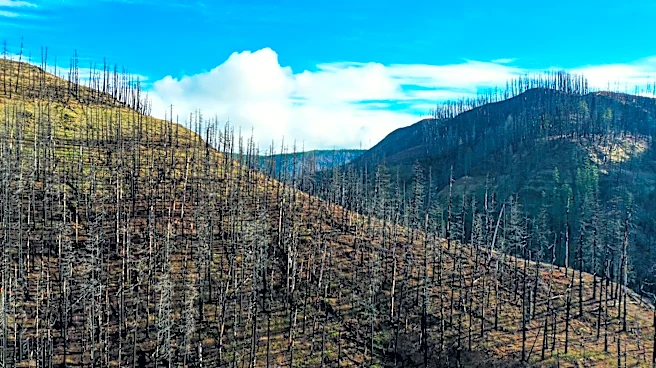
The Rowe Creek Complex fire, like many large-scale wildfires, brings to the forefront deeper discussions about land management, climate change, and community resilience. The sheer size of the burn area will have long-term ecological consequences, affecting forest health, water quality, and wildlife habitats for years to come. Economically, the fire impacts local industries, particularly timber and tourism, and places a significant financial burden on state and federal resources. The incident also prompts a re-evaluation of strategies for managing lightning-caused fires, including early detection and rapid response in remote areas. For affected communities, the recovery process will be extensive, highlighting the importance of preparedness, mutual aid, and long-term support for residents and ecosystems impacted by such catastrophic events.