





What's Happening?
A fire aboard the USS Gerald R. Ford, the world's largest aircraft carrier, caused significant damage while the ship was deployed in the Red Sea. The incident, which occurred in March, was initially downplayed by the Navy, but newly obtained video footage
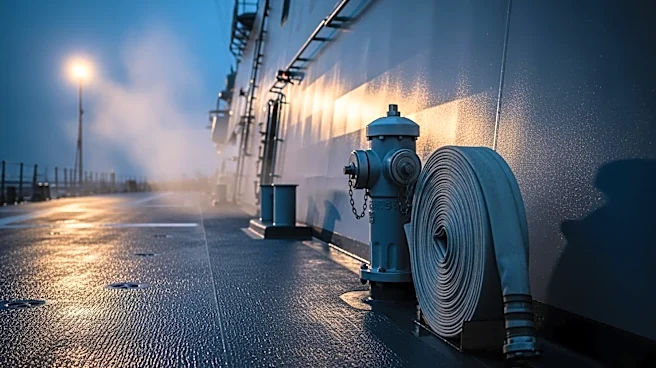
reveals extensive damage to the ship's interior, including destroyed bunks and charred metal. The fire-suppression system failed, forcing sailors to manually combat the blaze. The fire impacted the ship's operational capabilities, delaying sorties for two days and necessitating temporary repairs in Greece. The Navy's investigation into the fire is ongoing, and the ship is now facing a year of repairs following its record 11-month deployment.
Why It's Important?
The fire aboard the USS Gerald R. Ford highlights critical vulnerabilities in the Navy's fire-suppression systems, raising concerns about the safety and readiness of U.S. naval forces. The incident underscores the importance of robust damage control measures and the potential risks faced by military personnel during deployments. The carrier's role in U.S. military operations against Iran further emphasizes the strategic significance of maintaining operational readiness. The failure of the fire-suppression system could lead to increased scrutiny and potential changes in naval protocols to prevent similar incidents in the future.
What's Next?
The USS Gerald R. Ford is expected to undergo an extended maintenance period to address the damage from the fire and other wear-and-tear from its deployment. The Navy's ongoing investigation may result in recommendations for improvements to fire-suppression systems and damage control procedures. Other ships may need to fill the operational gap left by the Ford's absence, potentially impacting U.S. naval capabilities in key regions. The incident may also prompt discussions on the allocation of resources for maintenance and upgrades of naval vessels.