





What's Happening?
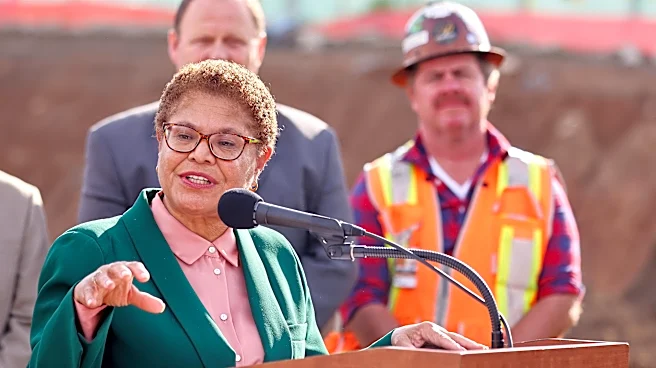
Los Angeles Mayor Karen Bass officially opened a new homeless housing project in North Hills, a converted Motel 6, with a total cost of $72 million. This 111-unit facility, located on Roscoe Boulevard, is part of Los Angeles' ongoing initiative to transform
existing motels and hotels into housing for the homeless. The project's price tag translates to nearly $650,000 per unit, sparking discussions about the financial efficiency of such endeavors. The former Motel 6 was acquired in 2023 for approximately $40 million, with an additional $32 million invested in its conversion. The facility will be managed by Hope the Mission, a non-profit organization providing homeless services. Residents are expected to receive comprehensive support, including daily meals, case management, housing navigation, and counseling services, aimed at facilitating their transition to stable housing and life management skills. Mayor Bass praised the renovated accommodations and the supportive programs, emphasizing their role in helping residents rebuild their lives.
Why It's Important?
This project highlights the significant financial investment Los Angeles is making to address its homelessness crisis, a critical issue impacting the city's social and economic landscape. The per-unit cost of nearly $650,000 for a converted budget motel raises questions about the sustainability and cost-effectiveness of current strategies. Such high expenditures could strain taxpayer resources and potentially divert funds from other essential city services, especially as the city faces mounting budget pressures. The initiative is part of California Governor Gavin Newsom’s Homekey program, which has allocated billions to similar conversions statewide. While providing much-needed housing and support services, the substantial costs involved could lead to increased public scrutiny and calls for greater transparency and efficiency in how public funds are utilized to combat homelessness. The success and long-term impact of these projects on reducing homelessness will be closely watched by policymakers and the public.
What's Next?
The operation of the North Hills facility by Hope the Mission will be a key focus, as its effectiveness in transitioning residents to stable housing will be a measure of the project's success. Continued evaluation of the Homekey initiative's overall cost-effectiveness and impact across Los Angeles and California is anticipated. Public and political discourse around the high per-unit costs of these housing projects is likely to persist, potentially leading to demands for alternative, more cost-efficient solutions or stricter oversight of project budgets. Future funding allocations for homelessness initiatives may be influenced by the perceived success and financial prudence of projects like this one. Stakeholders, including city officials, non-profit organizations, and taxpayer advocacy groups, will likely continue to debate the best approaches to address the homelessness crisis while managing public expenditures responsibly.
Beyond the Headlines
The substantial cost of this project underscores a broader challenge in addressing complex social issues like homelessness: balancing urgent humanitarian needs with fiscal responsibility. The conversion of existing structures, while seemingly efficient, can incur significant renovation expenses, raising ethical questions about the allocation of public funds. It also highlights the systemic issues contributing to homelessness, suggesting that housing alone, even with supportive services, may not fully resolve the crisis without addressing underlying factors such as mental health, addiction, and economic inequality. The debate over the cost per unit reflects a tension between providing immediate relief and implementing long-term, sustainable solutions. This project could influence future policy decisions regarding urban development, public-private partnerships in social services, and the overall strategy for tackling homelessness in major U.S. cities, potentially shifting focus towards prevention and more integrated community support systems.