





What's Happening?
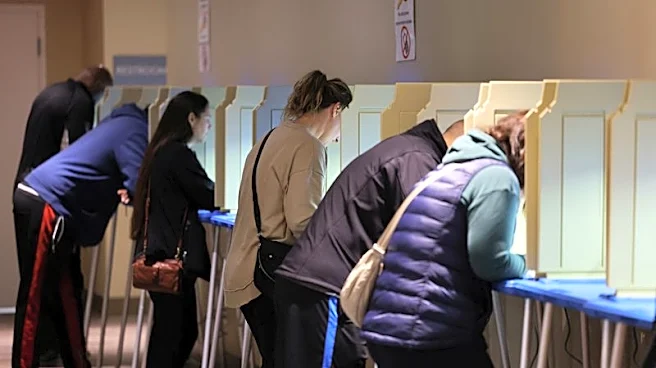
In Iowa, early voting for the 2026 primary election has commenced, allowing registered Republicans and Democrats to cast their votes for various offices, including governor, U.S. Senate, and state legislative positions. Voters can begin casting their ballots
at county auditor offices or designated satellite locations starting May 13. Additionally, absentee ballots can be requested and mailed out by county auditors. The deadline for requesting an absentee ballot is May 18, and voters must ensure their requests are received by county auditor offices by 5 p.m. on that day. Voters can also choose to vote in person on the primary Election Day, June 2, from 7 a.m. to 8 p.m. To participate, voters must declare a party affiliation, which can be done at the time of voting or when requesting an absentee ballot.
Why It's Important?
The early voting process in Iowa is crucial as it provides voters with flexible options to participate in the democratic process, especially for those who may face challenges voting on Election Day. The ability to vote early or by absentee ballot can increase voter turnout and ensure that more voices are heard in selecting party nominees for the general election. This process also highlights the importance of voter registration and the need for voters to be informed about deadlines and requirements to ensure their votes are counted. The primary election results will determine the candidates for the general election, impacting the political landscape in Iowa and potentially influencing national politics.
What's Next?
As the early voting period progresses, county auditors will continue to manage the distribution and collection of absentee ballots. Voters are encouraged to request and submit their absentee ballots promptly to avoid any issues with mail delays. Election officials will monitor the process to ensure compliance with state laws and address any voter concerns. The primary election results will be closely watched as they will set the stage for the general election in November, where the elected candidates will have the opportunity to shape state and national policies.