



What's Happening?
A proposal to phase out bottom trawling on high-seas seamounts by the end of 2027 was withdrawn at the UN General Assembly. The proposal, put forward by Armenia and supported by countries including Monaco, the UK, Canada, Sri Lanka, the Philippines, Fiji,
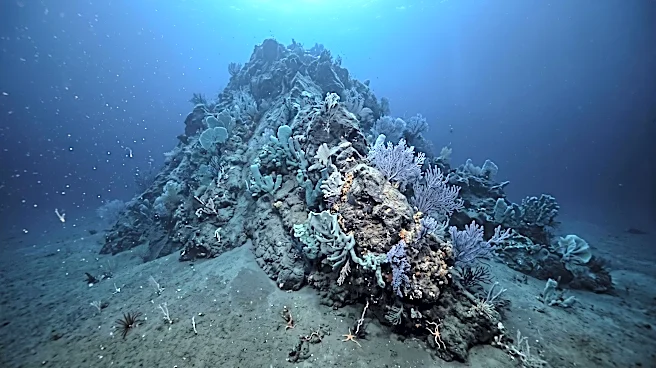
Vanuatu, and Tuvalu, faced significant opposition. A bloc of nations led by Japan, which included the EU, Russia, the USA, and Australia, joined forces against the measure. Bottom trawling is a destructive fishing method that involves dragging heavy nets across the seafloor, damaging ecosystems. Seamounts are recognized as biodiverse hotspots, providing nurseries for fish and shelter for various seafloor species, and attracting large predators like sharks, sea turtles, and humpbacks. The annual UN General Assembly resolution on 'Sustainable Fisheries' provides updates on rules for fishing in international waters, with the final resolution for this year due to be published on December 1, 2026.
Why It's Important?
The withdrawal of this proposal has significant implications for marine conservation and the future of deep-sea ecosystems. The U.S. joining other major fishing nations in opposing the ban suggests a prioritization of short-term economic interests over long-term environmental sustainability. This decision allows a destructive fishing practice to continue in highly biodiverse areas, potentially leading to irreversible damage to vulnerable marine habitats and species. Marine conservation expert Professor Callum Roberts expressed disappointment, noting that this group of nations has already contributed significantly to harming the deep ocean. The continued practice of bottom trawling threatens the delicate balance of seamount ecosystems, which are crucial for the life cycles of many marine species, including commercially important fish stocks and large predators. The lack of international consensus on such a critical environmental issue highlights ongoing challenges in global ocean governance.
What's Next?
The UN General Assembly is expected to publish its final resolution on 'Sustainable Fisheries' on December 1, 2026. This resolution will outline the updated rules for fishing in international waters, and it is now clear that a ban on bottom trawling on high-seas seamounts will not be included. Conservation organizations and environmental advocates will likely continue to push for stronger protections for deep-sea ecosystems, potentially through alternative diplomatic channels or by targeting individual nations. The debate over balancing fishing interests with marine conservation is expected to persist, with future proposals possibly focusing on more targeted regulations or voluntary agreements. The scientific community will also likely continue to monitor and report on the impacts of bottom trawling, providing further data to inform future policy discussions.
Beyond the Headlines
The outcome of this UN proposal underscores a broader tension between economic exploitation and environmental protection in international waters. The alliance of major nations against the ban reveals the complex geopolitical dynamics at play when addressing global environmental challenges. This decision could set a precedent for future discussions on marine resource management, potentially weakening efforts to protect other vulnerable ecosystems. Ethically, it raises questions about the responsibility of developed nations to safeguard global commons, especially when their actions contribute to environmental degradation. The long-term ecological consequences of continued bottom trawling, such as the loss of unique species and disruption of marine food webs, could have cascading effects on ocean health and, indirectly, on global climate regulation. This event highlights the ongoing struggle to achieve sustainable practices in an increasingly resource-demanding world.