






What's Happening?
An article by David Rosenberg on Haaretz discusses the economic and political challenges Israel faces under Prime Minister Benjamin Netanyahu's leadership, particularly due to his approach to prolonged military conflicts. Since the attack on October 7,
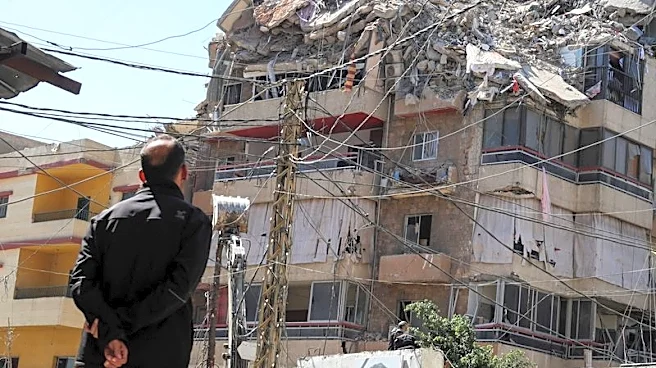
2023, Netanyahu has shifted Israel into a state of 'perpetual war readiness,' which has significant economic implications. The Israeli economy, heavily reliant on reserve forces, is not designed for long-term conflicts, yet military spending continues to rise. The cost of war has been substantial, with the first two years of conflict costing around $120 billion, and recent engagements with Iran adding at least another $12 billion. Despite a ceasefire with Lebanon, military operations persist in various regions, including Gaza and Syria, straining the economy further.
Why It's Important?
The ongoing military engagements under Netanyahu's leadership have far-reaching implications for Israel's economy and its international relations, particularly with the United States. The financial burden of maintaining a large number of reservists and continuous military operations is significant, with costs covered partly by U.S. military aid and government borrowing. This situation could lead to increased taxes or cuts in essential services like education and health. Additionally, Israel's international image, especially in the U.S., is affected, with declining support even among traditionally supportive groups. This could impact future U.S. military aid, which is crucial for Israel's defense budget. The potential reduction or cessation of American aid after 2028 could exacerbate financial pressures on Israel.
What's Next?
Looking ahead, Israel faces the challenge of managing its public debt, which has risen significantly since the beginning of the conflict. The debt-to-GDP ratio has increased from 60% to approximately 69% by the end of 2025, with projections suggesting it could reach 81% by 2035 if current military policies continue. The potential reduction in U.S. aid could further strain the economy. Israel may need to reassess its military strategies and economic policies to mitigate these risks. The international community, particularly the U.S., will likely continue to monitor the situation closely, with potential implications for future diplomatic and military support.
Beyond the Headlines
The ongoing conflict and its economic impact also have cultural and societal implications for Israel. The psychological effects of continuous war readiness and the financial strain on citizens could lead to shifts in public opinion and political dynamics within the country. The reliance on U.S. aid and the potential for its reduction highlight the need for Israel to explore alternative economic strategies and strengthen its domestic economy. Additionally, the decline in international support could influence Israel's foreign policy and its approach to regional conflicts.