






What's Happening?
Eleven Harvard Law School faculty members have joined nearly 300 law school professors in calling for University of California, Los Angeles (UCLA) Chancellor Julio J. Frenk to retract a statement he made regarding a symposium on the 25th anniversary of the September
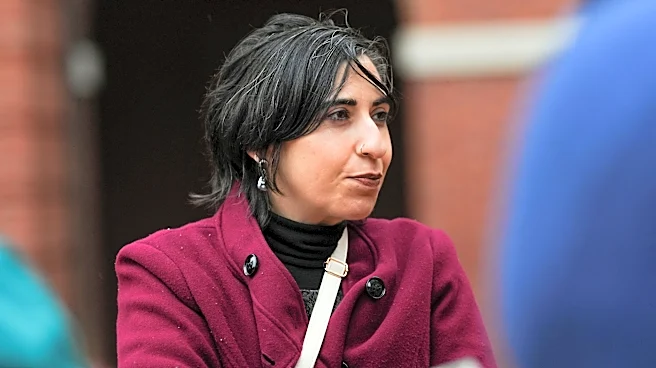
11 attacks. The symposium, hosted by UCLA School of Law, featured Melanie T. Partow, a lawyer who has represented Khalid Sheikh Mohammed, the alleged principal architect of the 9/11 attacks. Chancellor Frenk's statement distanced UCLA from the event, asserting that the university rejects antisemitism and terrorism and that academic freedom does not necessitate neutrality on these issues. He also stated that speaking at UCLA should not be mistaken for university endorsement of viewpoints or indifference to pain caused to community members. The faculty letter argues that Frenk's statement implies the conference endorsed antisemitism and terrorism, which they deem inaccurate and a dangerous violation of academic freedom, misinterpreting the rule of law and the function of law schools. They contend that conflating a client with their attorney runs contrary to basic rule of law principles and the right to counsel.
Why It's Important?
This situation highlights a significant tension between academic freedom, institutional responsibility, and public perception, particularly concerning sensitive topics like terrorism and national security. The faculty's criticism underscores the importance of the principle that all individuals, regardless of their alleged crimes, have a right to legal representation, and that lawyers should not be conflated with their clients' actions. This principle is fundamental to the U.S. legal system and the rule of law. The debate also touches upon the role of universities in hosting discussions that may be controversial or involve individuals associated with highly sensitive events. A university's stance on such matters can impact its reputation, its ability to attract diverse speakers and scholars, and its commitment to fostering open intellectual discourse. The outcome of this dispute could influence how academic institutions navigate similar challenges in the future, particularly in an environment where public scrutiny of university events and statements is increasingly intense.
What's Next?
The faculty letter calls on Chancellor Frenk to clarify that he does not believe the symposium promoted terrorism or antisemitism and to reaffirm UCLA's commitment to hosting speakers on a full range of topics. The response from Chancellor Frenk and UCLA will be crucial in determining the immediate future of this controversy. Depending on his actions, the faculty and other stakeholders may either accept his clarification or continue to press for a more robust defense of academic freedom and the principles of legal representation. This incident could also lead to broader discussions within academic circles about the boundaries of academic freedom, the responsibilities of university leadership in controversial situations, and the balance between institutional values and the need for open dialogue. It may also prompt other universities to review their policies and statements regarding events that could be perceived as controversial, especially those involving national security or human rights issues.
Beyond the Headlines
Beyond the immediate controversy, this event touches upon deeper societal issues regarding the perception of legal defense for individuals accused of heinous crimes. The public often struggles to separate the lawyer from the client, leading to misunderstandings about the legal system's foundational principles. This incident also reflects a broader trend of increased scrutiny and pressure on academic institutions to align with certain political or social narratives, particularly in the wake of significant national or international events. The faculty's defense of academic freedom and the right to counsel is not merely about this specific symposium but about safeguarding the intellectual independence of universities and the integrity of the legal profession. The episode also highlights the challenges university leaders face in balancing diverse stakeholder expectations, maintaining institutional integrity, and upholding core academic values in a highly polarized environment. The long-term implications could include a re-evaluation of how universities communicate their positions on controversial events and the extent to which they are willing to defend potentially unpopular but legally and academically sound principles.