








What's Happening?
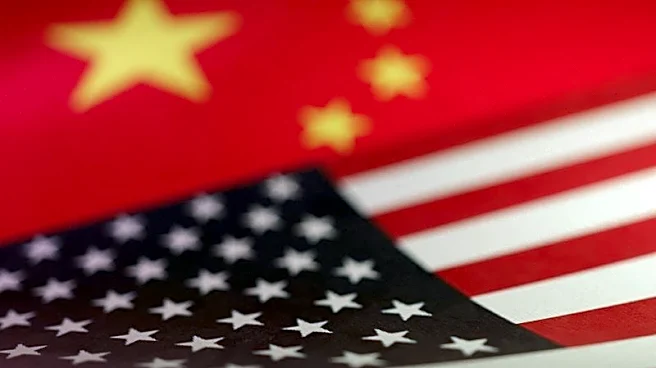
A recent report from the Office of Trade and Manufacturing Policy in the U.S. has identified Canada as one of the key facilitators in helping China evade tariffs imposed by the Trump administration. The report, titled 'The Great Transshipment Scam,' accuses
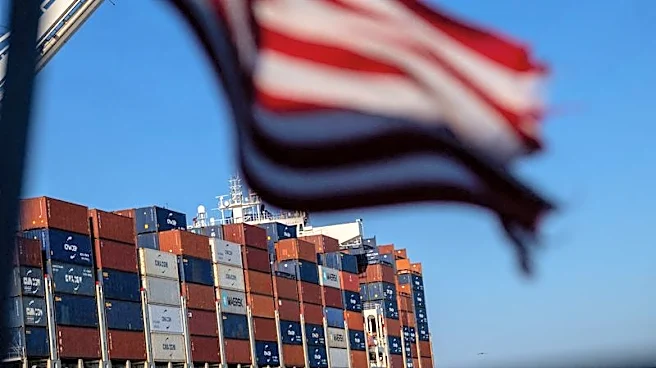
China of using a network of countries, including Canada, to reroute exports to the U.S. under more favorable tariff conditions. This practice, described as a 'modern form of smuggling,' allegedly costs the U.S. billions in lost tax revenue. The report claims that China exploits tariff-free provisions under the Canada-U.S. Mexico Agreement (CUSMA) by sending goods to Canada or Mexico, which are then shipped to the U.S. without additional tariffs. The report estimates that this transshipment results in a loss of $19 billion to $26 billion in federal tax revenues annually, displaces 450,000 jobs, and reduces the U.S. GDP by up to $150 billion each year.
Why It's Important?
The allegations in the report highlight significant challenges in U.S. trade policy and enforcement, particularly concerning the effectiveness of tariffs as a tool for economic leverage. If the claims are accurate, the U.S. economy could be facing substantial losses in revenue and employment, which could have broader implications for economic policy and international trade relations. The report's findings may also strain diplomatic relations between the U.S. and its trading partners, including Canada and Mexico, potentially impacting future trade negotiations and agreements. Furthermore, the use of artificial intelligence by U.S. Customs and Border Protection to detect transshipments underscores the increasing role of technology in trade enforcement.
What's Next?
The report's release comes ahead of a planned visit by Chinese President Xi Jinping to Washington, which may bring these issues to the forefront of diplomatic discussions. Additionally, ongoing trade negotiations between the U.S. and Canada aim to address sectoral tariffs and renew CUSMA, which could be influenced by the report's findings. The U.S. may also consider implementing stricter enforcement measures, such as penalty tariffs and sanctions, against countries involved in transshipment. The development of AI-driven systems to monitor trade activities suggests a future where technology plays a critical role in maintaining fair trade practices.