





What's Happening?
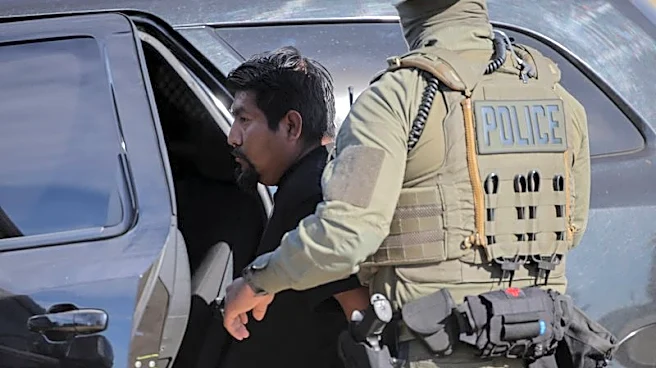
Clergy members have raised concerns about the treatment of detainees at the U.S. Immigration and Customs Enforcement (ICE) facility in Broadview, Illinois, particularly during religious observances. On Holy Thursday, faith leaders provided Communion and pastoral
care to detainees, who were reportedly handcuffed and shackled during the service. This incident was reported to U.S. District Judge Robert Gettleman, who has ordered that the government cannot impose a blanket ban on clergy ministering inside the facility while a lawsuit is ongoing. The lawsuit, filed by a coalition of faith leaders, argues that the government's refusal to allow ministry inside the facility violates religious rights. The Department of Homeland Security (DHS) has stated that religious services are not standard in processing centers like Broadview, where detainees are temporarily held before being transferred. The clergy's report highlighted the emotional impact of the shackling on both detainees and ministers, describing it as dehumanizing.
Why It's Important?
The situation at the Broadview ICE facility underscores ongoing tensions between religious organizations and government policies on immigration enforcement. The clergy's challenge to shackling practices highlights broader human rights concerns within detention centers, particularly regarding the treatment of detainees during religious observances. This case could set a precedent for how religious rights are balanced with security protocols in detention facilities. The outcome may influence future policies on religious access and detainee treatment, impacting both faith-based organizations and immigration enforcement practices. The case also reflects broader societal debates on immigration policy and human rights, with potential implications for how religious freedoms are protected in government-run facilities.
What's Next?
Judge Gettleman has urged the parties to reach a settlement that would allow ongoing religious ministry at the facility, consistent with historical practices. However, the parties have reached an impasse, potentially leading to a trial to determine more permanent access for clergy. The government is expected to provide further updates on the use of restraints at the facility, as staffing issues have been cited as a reason for the shackling. The resolution of this case could influence future interactions between religious organizations and immigration authorities, potentially affecting policy changes at other detention centers across the country.