





What's Happening?
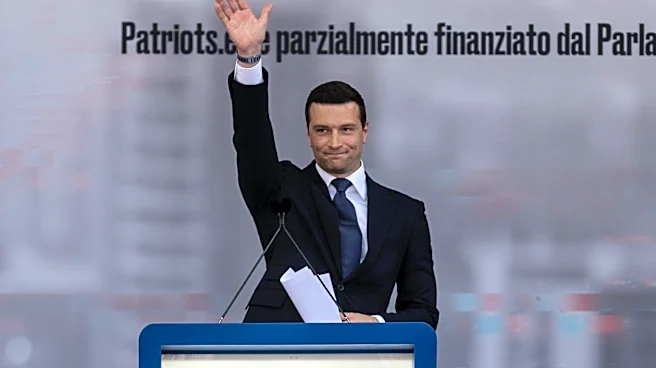
A French appeals court is set to make a crucial decision that could prevent Marine Le Pen from running for the presidency for a fourth time. If barred, Le Pen has prepared Jordan Bardella as her potential successor. Bardella, who currently leads the National
Rally party, differs from Le Pen in several ways, notably lacking the controversial Le Pen surname. This distinction could help him appeal to a broader voter base, as the Le Pen name carries historical baggage due to Jean-Marie Le Pen's far-right politics and legal controversies. Bardella has been working to broaden the party's appeal, adopting a more business-friendly tone while maintaining its anti-immigration stance. The decision by the court could significantly alter the political landscape in France, especially as President Emmanuel Macron cannot run for a third term.
Why It's Important?
The potential barring of Marine Le Pen from the presidential race and the rise of Jordan Bardella could have significant implications for French politics and the broader European context. Bardella's leadership might attract younger voters and those disenchanted with the traditional Le Pen legacy, potentially reshaping the National Rally's image. This shift could influence France's domestic policies, particularly on immigration and economic issues, and affect its role within the European Union. The outcome of this political transition could also serve as a bellwether for populist movements across Europe, as Bardella's approach may inspire similar strategies in other countries.
What's Next?
If the court rules against Le Pen, Bardella will likely become the National Rally's candidate for the presidency. This transition will test his ability to maintain the party's core support while expanding its appeal. Observers will be watching how Bardella navigates the political landscape, especially in engaging younger voters and addressing the party's historical controversies. The decision could also prompt reactions from other political parties in France, potentially leading to shifts in alliances and strategies as they prepare for the upcoming election.
Beyond the Headlines
The potential leadership change in the National Rally highlights the ongoing evolution of far-right politics in Europe. Bardella's rise could signify a generational shift, with younger leaders leveraging social media and modern communication strategies to engage with voters. This development may also prompt discussions about the role of legacy and identity in political movements, as Bardella seeks to distance himself from the Le Pen name while maintaining the party's core values. The situation underscores the dynamic nature of political branding and its impact on voter perceptions.