






What's Happening?
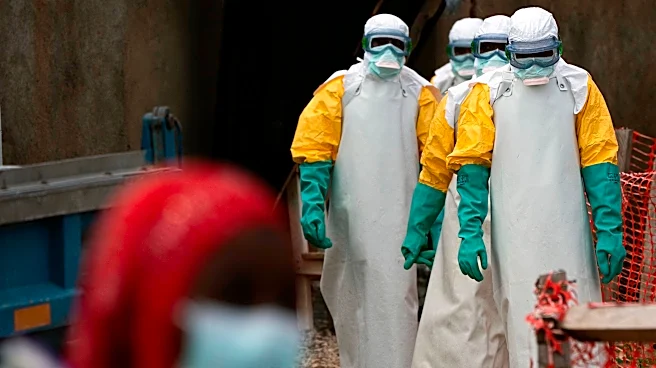
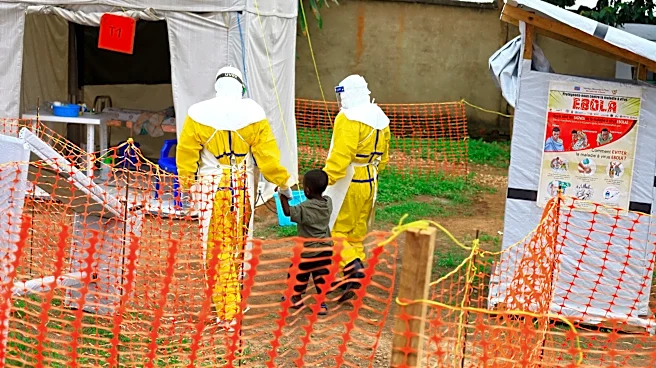
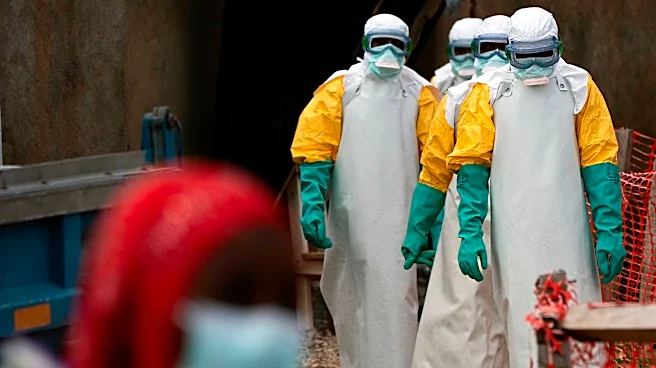
A new Ebola outbreak has been confirmed in the Ituri province of eastern Congo, with 246 suspected cases and 65 deaths reported, according to the Africa Centres for Disease Control and Prevention. The outbreak is centered in the Mongwalu and Rwampara
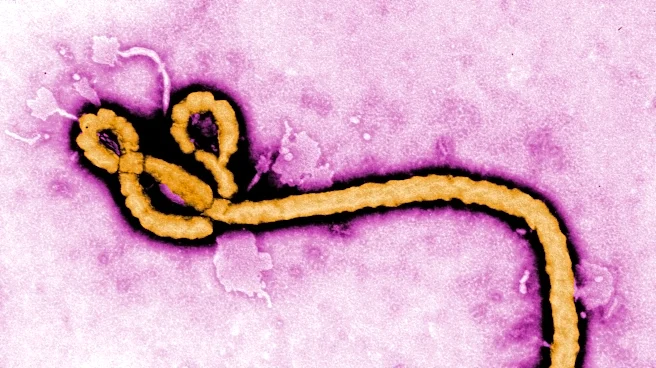
health zones, areas known for high population movement due to mining activities. The Ebola virus, which is highly contagious and often fatal, has been detected in 13 of 20 samples tested. The situation is complicated by the presence of armed groups in the region, which hampers healthcare efforts. The Africa CDC is coordinating with health authorities from Congo, Uganda, and South Sudan to address the outbreak, focusing on response priorities such as cross-border coordination and infection prevention.
Why It's Important?
The outbreak poses a significant public health risk due to its location in an urban area with frequent cross-border movement, increasing the potential for regional spread. The presence of armed groups further complicates containment efforts, as violence can disrupt healthcare operations. The strain involved, Bundibugyo ebolavirus, has no approved vaccines or treatments, unlike the more common Zaire strain. This increases the challenge of managing the outbreak effectively. The situation highlights the need for robust international support and coordination to prevent a wider epidemic, similar to the West Africa outbreak from 2014 to 2016, which resulted in over 11,000 deaths.
What's Next?
An urgent high-level coordination meeting is being convened by the Africa CDC with health authorities and key partners to strategize the response. This includes enhancing surveillance, laboratory support, and risk communication. The focus will also be on mobilizing resources and ensuring safe and dignified burials to prevent further spread. The international community's response will be crucial in providing the necessary support to contain the outbreak and prevent it from escalating into a larger regional crisis.
Beyond the Headlines
The outbreak underscores the ongoing vulnerability of regions like eastern Congo to infectious diseases, exacerbated by socio-political instability. The lack of vaccines for the Bundibugyo strain highlights gaps in global health preparedness and the need for research into less common strains of Ebola. The situation also raises ethical questions about the allocation of limited healthcare resources in conflict zones and the role of international aid in supporting fragile health systems.