





What's Happening?
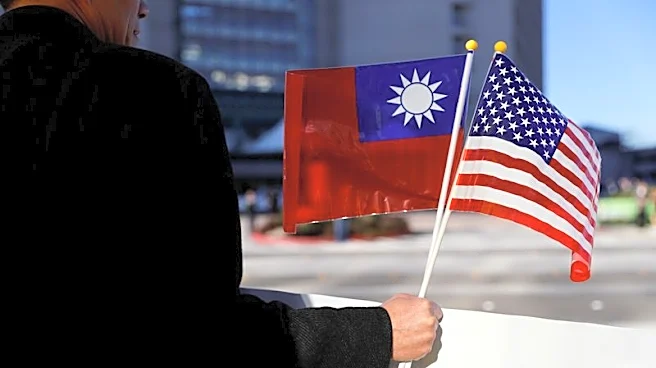
The relationship between the United States, China, and Taiwan has been marked by historical tensions and recent developments. Since 1979, the U.S. has adhered to the 'One China Policy,' recognizing Beijing over Taipei while maintaining informal support
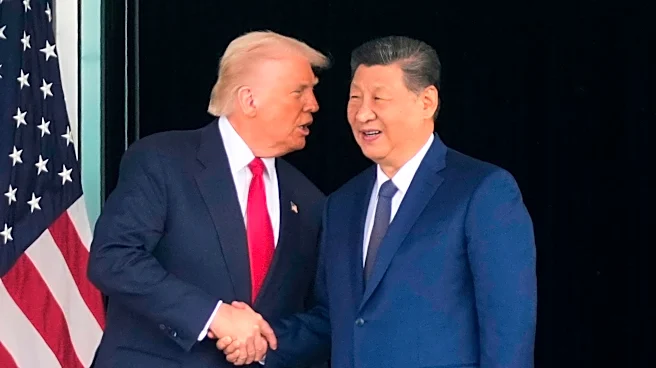
for Taiwan through the Taiwan Relations Act. This act obliges the U.S. to provide Taiwan with means of self-defense. Over the years, various U.S. administrations have navigated this complex relationship, with significant events such as the Six Assurances under President Reagan and the recent $11 billion arms package authorized by President Trump. Tensions have escalated with China's military drills around Taiwan, which Beijing claims are responses to 'separatist actions.' These drills, including precision attacks and blockades, highlight China's stance on Taiwan as a renegade province. The U.S. continues to oppose unilateral changes to the status quo, emphasizing peaceful resolutions.
Why It's Important?
The dynamics between the U.S., China, and Taiwan have significant implications for international relations and regional stability. The U.S.'s commitment to Taiwan's defense is a critical aspect of its foreign policy in Asia, impacting its relations with China. The arms sales and military support to Taiwan serve as a deterrent against potential aggression from China, but also risk escalating tensions. China's military exercises around Taiwan demonstrate its willingness to assert its claims, which could lead to increased military confrontations. The situation affects global trade routes and economic stability, as Taiwan is a major player in the semiconductor industry. The U.S.'s stance on Taiwan also influences its alliances in the region, as countries like Japan and South Korea closely monitor the developments.
What's Next?
Future developments in U.S.-China-Taiwan relations will likely involve continued diplomatic negotiations and military posturing. The U.S. may further solidify its support for Taiwan through additional arms sales and military cooperation. China's response could include more military drills and diplomatic pressure on countries recognizing Taiwan. The international community will watch closely, as any escalation could have broader implications for global security and economic stability. The U.S. and its allies may seek to strengthen regional security frameworks to counterbalance China's influence. Additionally, Taiwan's internal politics and its leadership's approach to cross-strait relations will play a crucial role in shaping future interactions.