
What's Happening?
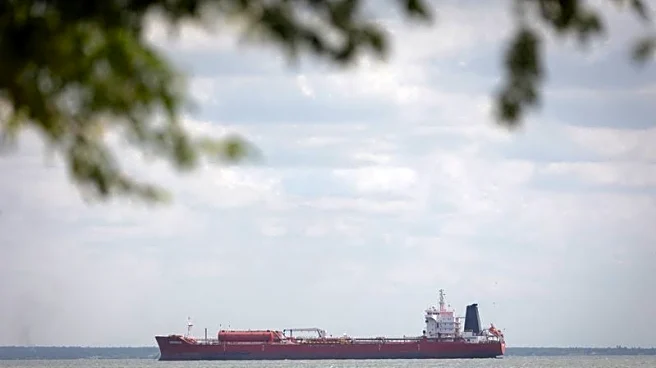
The Trump administration has temporarily lifted sanctions on Russian oil stranded at sea to address rising energy prices caused by Iranian threats against tanker ships. Treasury Secretary Scott Bessent announced the decision as a measure to stabilize
global energy markets and mitigate the impact of the conflict with Iran. The temporary authorization allows countries to purchase Russian oil already in transit, with the aim of increasing global supply without significantly benefiting the Russian government financially. The exemptions are set to last until April 11, as oil prices have surged to $100 per barrel due to the ongoing conflict.
Why It's Important?
This policy shift is significant as it reflects the administration's efforts to balance geopolitical tensions with economic stability. By allowing the purchase of Russian oil, the U.S. aims to prevent further spikes in energy prices, which could have widespread economic repercussions. The decision also highlights the complexities of international sanctions and their impact on global markets. While the move may provide short-term relief, it raises questions about the long-term implications for U.S.-Russia relations and the effectiveness of sanctions as a tool of foreign policy.
What's Next?
The temporary lifting of sanctions is likely to prompt reactions from various stakeholders, including U.S. allies and domestic political figures. The administration will need to navigate these responses while monitoring the impact on energy prices and market stability. Additionally, the situation in the Strait of Hormuz remains a critical factor, as any escalation could further disrupt oil supplies and necessitate additional policy adjustments.