








What's Happening?
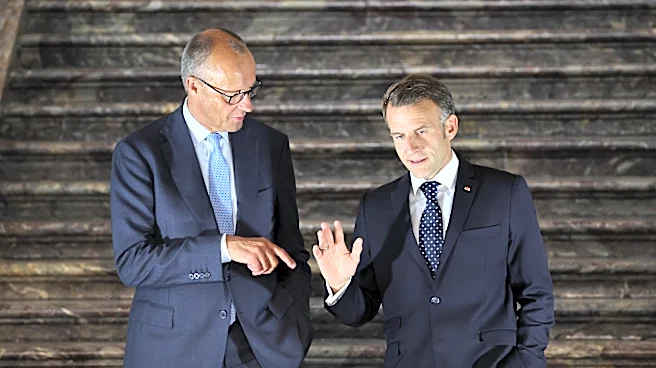
Germany and France have announced plans to deepen their defense cooperation in response to economic pressures from China. German Chancellor Friedrich Merz and French President Emmanuel Macron met in Bruehl, Germany, to discuss strategies to counteract
China's economic influence, which they claim is exerting pressure on Europe through overcapacity and an undervalued currency. The leaders aim to safeguard European security and defense by enhancing missile defense and long-range strike systems. They also addressed the need for fair trade practices, criticizing China's level of state support to its industries. The meeting follows the collapse of a joint fighter jet project earlier this year, but both countries are committed to continuing cooperation on other defense projects, including nuclear deterrence and the Future Combat Air System (FCAS).
Why It's Important?
This development is significant as it highlights the growing concern among European nations about China's economic practices and their impact on European industries. By strengthening defense ties, Germany and France are taking steps to ensure their security and economic stability. The move also reflects a broader European strategy to achieve military autonomy and reduce reliance on external powers, particularly the United States, which has shown signs of reducing its defense commitments in Europe. The cooperation between Germany and France could lead to more robust EU-wide measures to counteract economic pressures from China, potentially affecting trade relations and industrial policies across the continent.
What's Next?
Germany and France plan to continue their defense collaboration, with German troops participating in French nuclear exercises for the first time. The leaders have also committed to ongoing projects like the FCAS, focusing on cloud-based information systems. Future steps may include tighter governance and supervision measures for defense cooperation, addressing past disagreements between industrial partners. The outcome of these efforts could influence the broader European defense strategy and its approach to international trade, particularly with China.