
What's Happening?
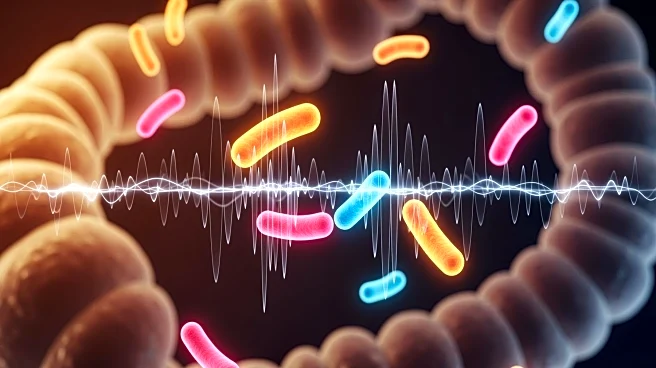
Researchers have discovered a novel mechanism by which gut bacteria can directly influence human immune responses. The study, led by a consortium including Helmholtz Munich and other international partners,
found that certain gut bacteria possess type III secretion systems, previously thought to be exclusive to pathogenic bacteria. These systems allow bacteria to inject proteins into human cells, affecting immune and metabolic pathways. The research, published in Nature Microbiology, suggests that these interactions may contribute to inflammatory diseases like Crohn's disease, as genes for these bacterial proteins are more prevalent in affected individuals.
Why It's Important?
This discovery provides a deeper understanding of the complex interactions between the human microbiome and immune system, shifting the focus from correlation to causation. By identifying specific bacterial proteins that modulate immune responses, the study opens new avenues for therapeutic interventions targeting gut bacteria to treat or prevent inflammatory diseases. The findings could lead to more precise strategies for managing conditions like Crohn's disease, potentially improving patient outcomes and reducing healthcare costs associated with chronic inflammation.
What's Next?
Future research will aim to explore the specific functions of bacterial effector-host interactions in various tissues and disease contexts. Understanding these mechanisms could lead to the development of targeted therapies that modulate the microbiome to enhance immune function or mitigate disease. Researchers will also investigate whether these bacterial systems evolved for pathogenic purposes or if they originally supported symbiotic relationships, providing insights into the evolution of host-microbiome interactions.