

What's Happening?
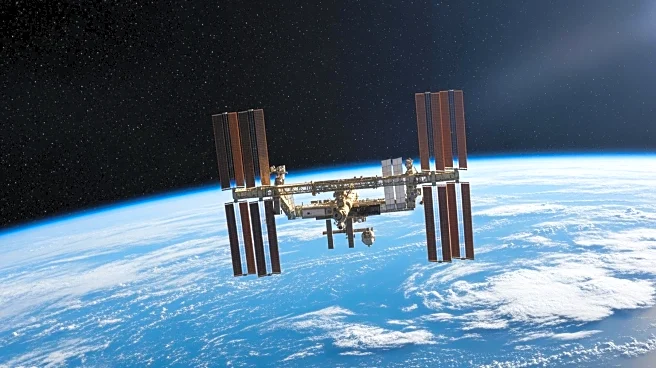
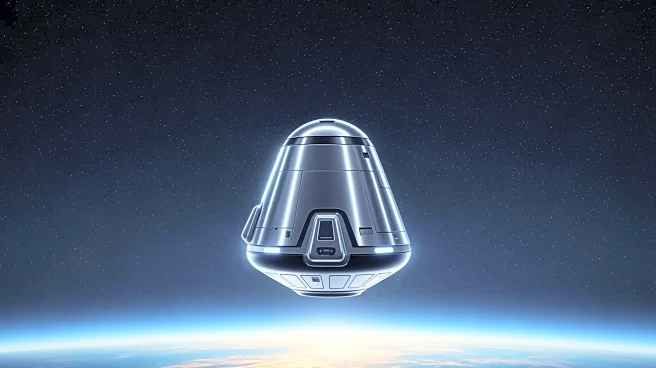
A SpaceX Dragon spacecraft has successfully returned to Earth, carrying several thousand pounds of scientific experiments and hardware from the International Space Station (ISS). The spacecraft splashed down in the Pacific Ocean off the coast of California,
concluding a six-month mission. The ISS crew is now preparing for the departure of two more cargo ships in March, including JAXA's HTV-X1, which will conduct scientific experiments in orbit before a planned reentry. The crew is also engaged in advanced space biology and technology research.
Why It's Important?
The return of the Dragon spacecraft marks a significant milestone in the ongoing collaboration between NASA and SpaceX, highlighting the importance of commercial partnerships in space exploration. The scientific cargo retrieved from the ISS will contribute to various research fields, potentially leading to breakthroughs in space biology and technology. The upcoming cargo missions and continued research efforts underscore the ISS's role as a hub for international scientific collaboration and innovation.
What's Next?
Following the Dragon's return, the ISS crew will focus on preparing the HTV-X1 for its departure and subsequent scientific experiments. The crew will also continue packing the Cygnus XL cargo craft for its reentry. These activities are part of the ISS's ongoing mission to support scientific research and technology development in space. Future missions will likely involve further collaboration with international partners and the testing of new technologies to enhance space exploration capabilities.