



What's Happening?
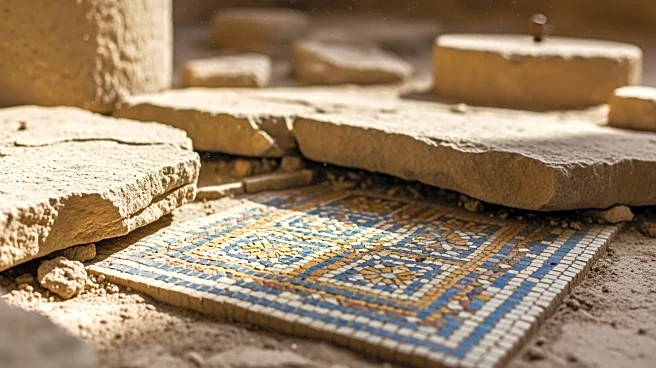
A Byzantine mosaic has been discovered beneath an old water mill in the Beyazsu area of Midyat district, Turkey. The mosaic was found during restoration work on the mill, which was intended to be opened for tourism. Upon noticing colorful stones embedded
in the floor, the landowners contacted the Mardin Museum, leading to an archaeological excavation. The mosaic, covering approximately 430 square feet, features geometric designs and an inscription reading 'Tittos Domestikos,' suggesting it belonged to a high-ranking official. This discovery provides new insights into the Byzantine Empire's influence in the region.
Why It's Important?
The discovery of the mosaic is significant as it sheds light on the Byzantine Empire's presence in northern Mesopotamia, an area not extensively explored for such artifacts. The inscription 'Tittos Domestikos' offers a rare glimpse into the social and political structures of the time, potentially reshaping historians' understanding of local governance. The mosaic's preservation and public display could boost cultural tourism, drawing attention to the region's rich historical heritage and contributing to the local economy.
What's Next?
The landowners, in collaboration with the Ministry of Culture and Tourism, plan to preserve the mosaic and open the site to the public. This initiative aims to promote cultural tourism and educate visitors about the region's historical significance. Further excavations may uncover more of the structure, providing additional insights into the Byzantine era in this part of Turkey.
Beyond the Headlines
The mosaic's discovery highlights the importance of preserving historical sites and the potential for archaeological finds to alter historical narratives. It underscores the need for careful restoration practices that consider the possibility of uncovering significant artifacts. The collaboration between private landowners and government bodies exemplifies a successful model for cultural heritage preservation.