


What's Happening?
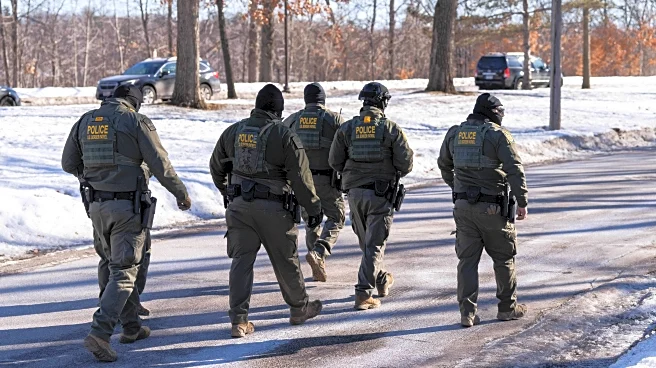
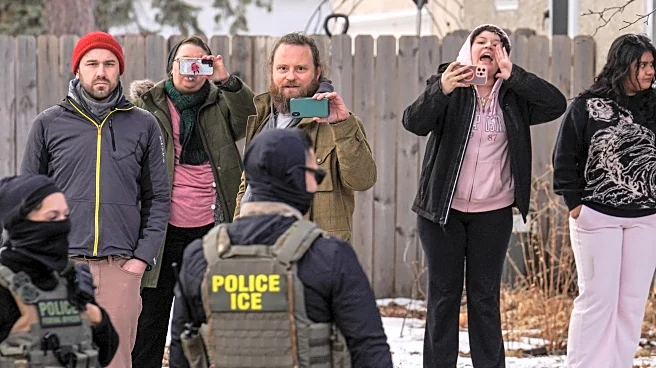
The Department of Justice has decided to drop federal charges against two men, Alfredo Alejandro Aljorna and Julio Cesar Sosa-Celis, who were accused of assaulting Immigration and Customs Enforcement (ICE) officers in Minneapolis. The decision was made
after newly discovered evidence was found to be materially inconsistent with the allegations. The charges, which included forcibly assaulting, resisting, or impeding federal officers, were initially filed following an incident where Sosa-Celis was shot by an ICE officer. The incident drew significant attention amid heightened federal immigration enforcement in Minnesota. The dismissal of charges is with prejudice, meaning they cannot be reintroduced. The case involved conflicting accounts from the Department of Homeland Security and the FBI regarding the events leading to the alleged assault.
Why It's Important?
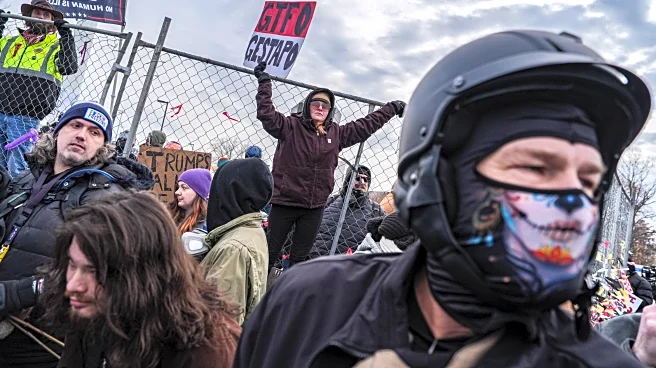
This development is significant as it highlights the complexities and challenges in federal law enforcement and immigration-related cases. The dismissal of charges due to inconsistent evidence underscores the importance of accurate and reliable evidence in legal proceedings. It also reflects on the broader issues of federal immigration enforcement and the tensions it can create within communities. The case had previously contributed to public protests and heightened tensions in Minneapolis, illustrating the societal impact of such incidents. The decision to drop the charges may influence public perception of federal law enforcement practices and accountability.
What's Next?
The dismissal of charges may lead to further scrutiny of ICE operations and the handling of similar cases in the future. It could prompt calls for more transparency and oversight in federal law enforcement activities, particularly those involving immigration enforcement. The case may also influence ongoing discussions about the role of federal agents in local law enforcement and the need for clear and consistent evidence in legal proceedings. Stakeholders, including civil rights groups and community leaders, may continue to advocate for reforms and accountability in federal law enforcement practices.