







What's Happening?
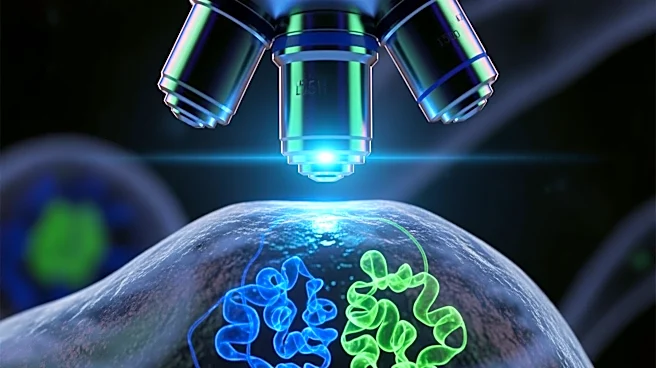
Researchers at Albert Einstein College of Medicine and the Salk Institute for Biological Studies have developed a new molecular imaging technology that significantly improves the visualization of proteins inside living cells. This technology utilizes
engineered fluorescent nanobodies that illuminate only when bound to their specific targets, reducing background noise and enhancing imaging precision. The system, described in Nature Methods, allows for multicolor imaging, enabling researchers to track multiple proteins simultaneously. This advancement is expected to provide deeper insights into cellular processes, aiding in the study of complex biological phenomena such as cell signaling and disease progression.
Why It's Important?
This breakthrough in imaging technology represents a significant advancement in biological research, offering scientists a powerful tool to study cellular processes with unprecedented clarity. The ability to visualize proteins with minimal background interference can lead to more accurate data, facilitating discoveries in areas such as cancer research, neurobiology, and developmental biology. For the scientific community, this technology could accelerate the pace of research and innovation, potentially leading to new treatments and therapies. The implications extend to the pharmaceutical industry, where enhanced imaging can improve drug development processes and outcomes.