





What's Happening?
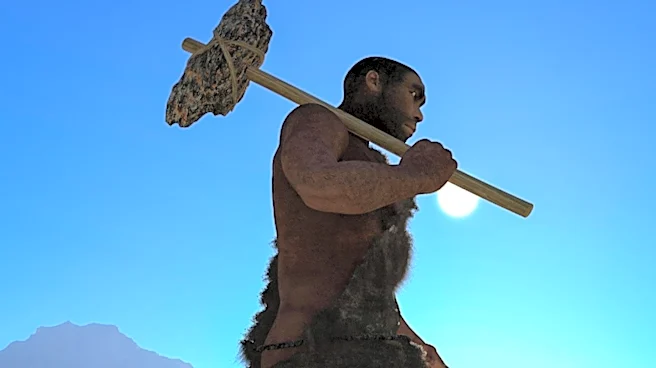
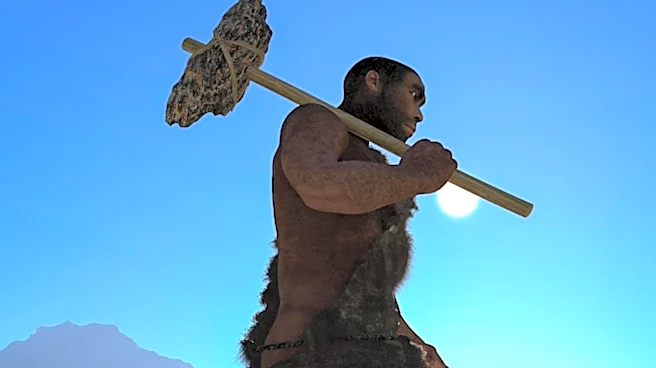
Recent research has identified that the Neandertal version of the growth hormone receptor, inherited through interbreeding with Neandertals around 47,000 years ago, is linked to increased muscle mass in modern humans. This receptor, which is present in up
to 24% of people in some parts of South Asia, results in an average increase of 270 grams of muscle mass among carriers. The study, led by Hugo Zeberg of Karolinska Institutet and Philipp Kanis of the Max Planck Institute for Evolutionary Anthropology, found that cells with the Neandertal receptor grew 40% more when exposed to growth hormone compared to those with the modern human version. The receptor also influences subtle differences in jaw and tooth structure.
Why It's Important?
The findings highlight the lasting impact of Neandertal genetics on modern human physiology. Understanding how ancient genetic variants influence contemporary human traits can provide insights into human evolution and the genetic factors that contribute to physical characteristics. This research underscores the complexity of human genetic heritage and the role of ancient interbreeding events in shaping modern populations. The study also opens avenues for further research into how other Neandertal genetic traits may affect health and physical attributes today.