








What's Happening?
A recent study published in the journal Nature challenges the long-held belief that plastics, particularly microplastics, are chemically inert. The research found that when microplastics come into contact with water, they act as a catalyst to create free
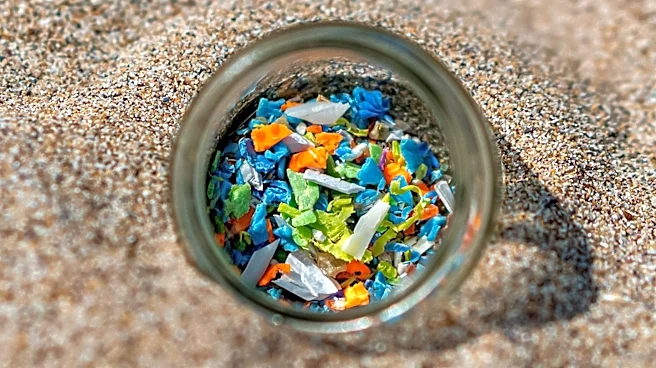
radicals. These unstable molecules are linked to inflammation and disease in the human body. Dr. Leonardo Trasande, a pediatrician and director of the NYU Center for the Investigation of Environmental Hazards, explained that unlike larger plastic pieces, microplastics have a significantly greater surface area relative to their volume, which facilitates these chemical reactions. This discovery suggests that microplastics are biologically active, contributing to conditions like cardiovascular disease by increasing oxidative stress and inflammation. The study focuses solely on the interaction of microplastics with water, not on added chemicals or impurities within plastic materials, highlighting a previously undescribed aspect of the threat plastics pose to human health.
Why It's Important?
This study is important because it fundamentally alters the understanding of microplastics' interaction with biological systems, moving beyond concerns about chemical additives to the inherent properties of the plastic particles themselves. The finding that microplastics generate free radicals linked to inflammation and disease has significant implications for public health, potentially explaining previously observed correlations between microplastic exposure and various health issues, including heart attack, stroke, and death. Economically, plastic chemicals already impose a substantial burden on the U.S. economy, estimated at $250 billion in disease-related costs, representing 1.2 percent of the gross domestic product. This new understanding of microplastics' biological activity could further escalate these costs and impact healthcare systems, insurance industries, and consumer product regulations. It underscores the need for re-evaluating the safety of plastic use and disposal, affecting manufacturers, consumers, and policymakers.
What's Next?
The findings of this study are expected to fuel further research into the mechanisms by which microplastics impact human health and could influence public policy and regulatory actions in the U.S. There is a growing movement to increase federal investment in research to understand the effects of micro and nanoplastics. Consumers are also being encouraged to take individual actions to reduce plastic exposure, such as using glass or stainless steel alternatives, avoiding microwaving plastics, and cooking at home with fresh ingredients. Historically, consumer activism has driven significant changes in the plastics industry, as seen with the ban of BPA in baby bottles. This new scientific evidence could empower consumers and advocacy groups to push for more stringent regulations and industry changes, potentially leading to innovations in plastic alternatives and more sustainable manufacturing practices. The 'Make America Healthy Again' movement is already sparking conversations about microplastics and chemicals in plastic materials, indicating a potential for increased public and political pressure.
Beyond the Headlines
The study's revelation that microplastics are not inert carries profound ethical and societal implications. For decades, the chemical inertness of plastics was a foundational assumption supporting their widespread adoption across numerous products, from food packaging to medical devices. This new understanding challenges that paradigm, suggesting a systemic oversight in assessing the long-term health impacts of plastic materials. It highlights a broader issue of externalities in modern economics, where the costs of environmental and health harms are borne by society rather than fully internalized by producers. The multi-dimensional threat posed by plastic to human health, now including the direct biological activity of microplastics, necessitates a re-evaluation of our relationship with plastic. This could lead to a cultural shift towards more sustainable consumption patterns, greater corporate responsibility, and a more holistic approach to public health that considers environmental exposures as a critical factor alongside diet and physical activity.