



What's Happening?
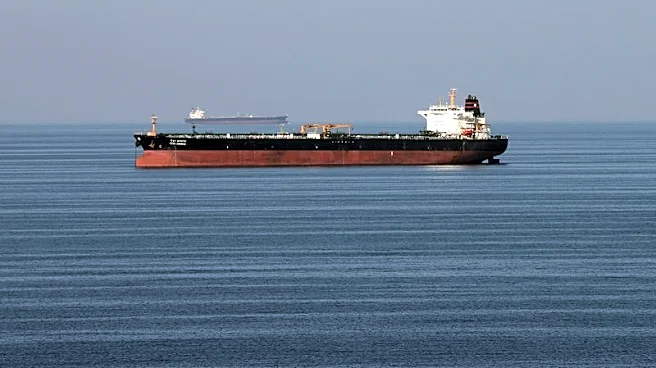
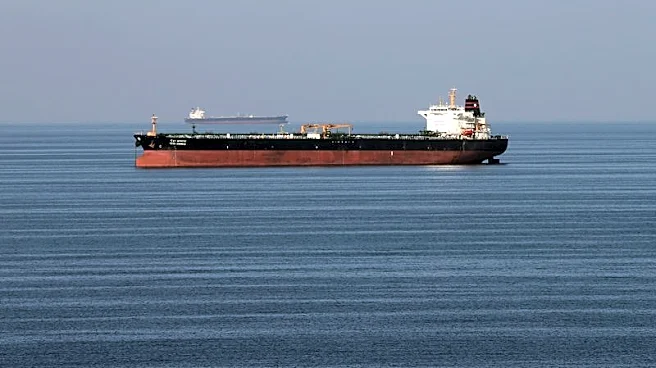
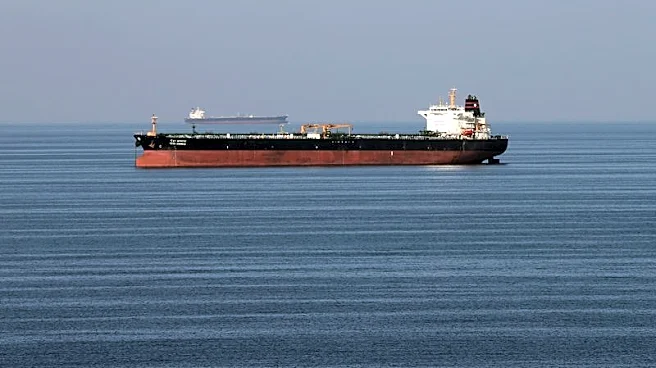
Oil prices have risen as uncertainty looms over potential negotiations between the U.S. and Iran regarding the Strait of Hormuz. U.S. West Texas Intermediate futures increased by 2.4% to $80.03 per barrel, while Brent crude also saw a similar rise. President
Trump has indicated that the U.S. is 'only semi-negotiating' with Iran, relying on a naval blockade rather than airstrikes to exert pressure. Despite previous talks of a deal to allow free movement of ships through the strait, no agreement has been reached, and tensions remain high.
Why It's Important?
The Strait of Hormuz is a critical chokepoint for global oil supply, and any disruption can significantly impact oil prices and global markets. The current uncertainty affects not only the energy sector but also broader economic stability, as oil price fluctuations can influence inflation and economic growth. The situation underscores the geopolitical complexities of U.S.-Iran relations and the strategic importance of the region. Stakeholders in the energy market are closely watching developments, as any resolution or escalation could have far-reaching consequences.
What's Next?
Negotiations between the U.S. and Iran are likely to continue, with potential diplomatic efforts to reach a resolution. The international community, particularly countries reliant on oil imports, will be monitoring the situation closely. Any agreement or further escalation could lead to shifts in oil prices and market dynamics. Additionally, the U.S. may explore alternative strategies to ensure the security of the Strait of Hormuz and maintain stability in the region.