






What's Happening?
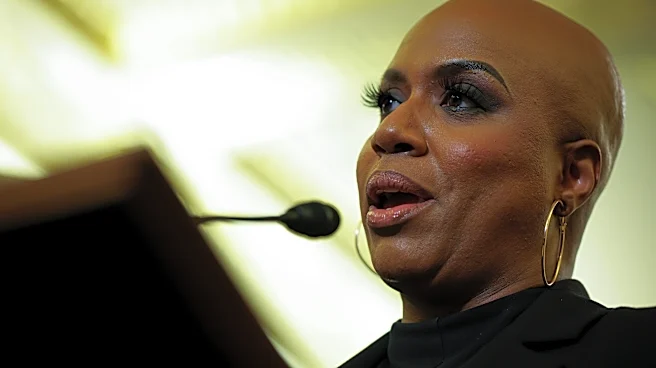
A petition advocating for Representative Ayanna Pressley to become the next Speaker of the House has garnered over 30,000 signatures on Change.org. This public support highlights a desire among some Americans for a progressive leader who champions specific
policy initiatives. In response, Representative Pressley launched her own petition, outlining a progressive agenda that includes advancing Medicare for All, passing national abortion protections, implementing guardrails and oversight for the AI industry, and abolishing ICE. This move by Pressley, a high-profile House progressive from Massachusetts, suggests a potential push for a more left-leaning direction within the Democratic Party, even as House Minority Leader Hakeem Jeffries is widely considered the presumed speaker-in-waiting. The circulating petitions underscore a growing sentiment for a leadership change that aligns with a strong progressive platform.
Why It's Important?
The emergence of petitions supporting Representative Pressley for Speaker, and her subsequent launch of a petition detailing her policy priorities, signals a significant internal dynamic within the Democratic Party. This development could indicate a growing divide between the party's progressive wing and its more centrist leadership, potentially influencing future legislative priorities and the party's overall direction. If the progressive agenda outlined by Pressley gains further traction, it could pressure Democratic leadership to adopt more ambitious policies on healthcare, reproductive rights, technology regulation, and immigration. This could lead to more contentious debates within Congress and potentially impact the legislative landscape, affecting various sectors from healthcare providers to technology companies and immigration services. The public's engagement through these petitions demonstrates a desire for specific policy outcomes and a particular style of leadership.
What's Next?
While Representative Pressley has not explicitly stated an intention to challenge Hakeem Jeffries for the speakership, the momentum behind her progressive agenda suggests that these issues will remain prominent within Democratic discourse. The continued growth of public support for her platform could empower the progressive caucus to exert greater influence on party decisions and legislative strategies. Future developments may include increased advocacy for the policies outlined in Pressley's petition, potentially leading to new legislative proposals or amendments to existing bills. The situation could also prompt House Minority Leader Jeffries to address these progressive concerns more directly as he solidifies his position for the speakership. The ongoing public engagement through petitions will likely serve as a barometer for the strength of the progressive movement within the Democratic Party.
Beyond the Headlines
The petitions surrounding Representative Pressley's potential speakership and her progressive agenda highlight a broader trend of grassroots activism attempting to shape political leadership and policy. This phenomenon reflects a desire among some voters for more direct representation of their values and a challenge to traditional political hierarchies. The focus on issues like Medicare for All, national abortion protections, AI regulation, and abolishing ICE points to a fundamental re-evaluation of government's role in society and the economy. This movement could signify a long-term shift in the Democratic Party's ideological center, potentially leading to more pronounced policy differences with the Republican Party and impacting the national political landscape for years to come. The use of online petitions as a tool for political mobilization also underscores the evolving nature of political engagement in the digital age.