







What's Happening?
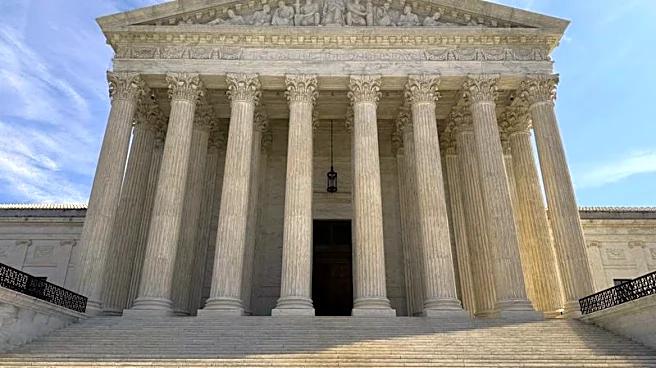
The U.S. Supreme Court has overturned the conviction and death sentence of Terry Pitchford, a black man who spent 20 years on Mississippi's death row. Justice Brett Kavanaugh, writing for the 5-4 majority, highlighted racial bias during jury selection
as the reason for the decision. The prosecutor in Pitchford's trial excluded four black jurors without providing race-neutral reasons, which the court deemed unconstitutional. This ruling is part of a broader trend by the Supreme Court to eliminate race-based practices in judicial contexts, including college admissions and legislative districts.
Why It's Important?
This decision underscores the Supreme Court's commitment to ensuring racial fairness in the judicial process. By overturning Pitchford's conviction, the court reinforces the principle that justice should be color-blind, a stance that could influence future cases involving racial bias. The ruling may prompt changes in how juries are selected, potentially reducing racial discrimination in the legal system. It also highlights ongoing debates about racial fairness in the U.S., with implications for public policy and civil rights advocacy.
What's Next?
The ruling may lead to increased scrutiny of jury selection processes across the country, with potential reforms to ensure compliance with constitutional standards. Legal experts and civil rights groups may push for further changes to prevent racial bias in trials. Additionally, the decision could influence upcoming cases where racial discrimination is alleged, setting a precedent for how such issues are addressed by the courts.
Beyond the Headlines
The decision may have broader cultural implications, challenging perceptions of racial bias in the justice system and prompting discussions about equality and fairness. It could also impact legislative efforts aimed at reforming jury selection processes, particularly in states with histories of racial discrimination. The ruling may serve as a catalyst for broader societal shifts towards racial equity in various sectors.