






What's Happening?
Second Harvest Food Bank of Northwest North Carolina has initiated a new neighborhood food drive program across Alamance, Forsyth, and Randolph counties. This initiative, in partnership with PORCH Communities, employs a recurring doorstep collection model.
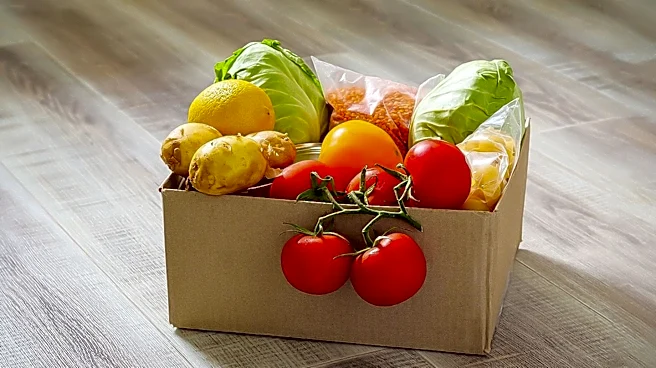
Under this system, residents are asked to leave bags of specific shelf-stable food items on their porches once a month. Volunteers then collect these donations and transport them to local food pantries that are participating in the program. The primary objective of this new model is to establish a consistent flow of donations that are specifically tailored to the actual needs of the local food organizations. This targeted approach aims to enhance the efficiency and relevance of food donations, ensuring that pantries receive items they genuinely require to support their communities. Community members interested in contributing to this program can find more information and details on how to get involved by visiting Second Harvest’s official website.
Why It's Important?
This new doorstep donation model by Second Harvest Food Bank holds significant importance for addressing food insecurity in the specified North Carolina counties. By creating a steady and predictable stream of donations, the program can help stabilize the inventory of local food pantries, allowing them to better plan and meet the needs of their clients. The tailored approach, focusing on requested shelf-stable foods, minimizes waste and ensures that resources are allocated effectively, directly benefiting those experiencing food shortages. This model also fosters community engagement by providing a convenient and accessible way for residents to contribute to local welfare efforts, potentially increasing overall donation volumes. For the U.S. at large, successful implementation of such localized, efficient food collection systems could serve as a blueprint for other regions grappling with similar challenges, demonstrating an innovative approach to community-based hunger relief that is both sustainable and responsive to specific local demands.
What's Next?
The immediate next steps for the Second Harvest Food Bank program will involve monitoring the initial rollout and effectiveness of the doorstep donation model in Alamance, Forsyth, and Randolph counties. Officials will likely assess the volume and type of donations collected, as well as the feedback from both participating residents and food pantries. This evaluation will be crucial for identifying any operational adjustments needed to optimize the program's efficiency and reach. If successful, there is potential for the program to expand to additional counties within the Second Harvest Food Bank's service area, or even inspire similar initiatives in other regions across the U.S. The organization will continue to encourage community involvement, providing ongoing information and support through its website to ensure sustained participation and donation levels. Future efforts may also include refining the list of requested items based on evolving community needs and pantry feedback.
Beyond the Headlines
Beyond the immediate goal of collecting food, this initiative by Second Harvest Food Bank and PORCH Communities touches upon broader societal implications regarding community resilience and local self-sufficiency. The doorstep collection model not only addresses immediate hunger but also strengthens community bonds by fostering a collective sense of responsibility for local welfare. It highlights a shift towards more localized and direct forms of aid, potentially reducing reliance on larger, more centralized distribution networks. This approach could also serve as a model for other forms of community support, demonstrating how convenience and direct engagement can mobilize significant local resources. Furthermore, by tailoring donations to specific needs, the program subtly educates the public on the realities of food insecurity, moving beyond generic appeals to a more informed and impactful form of giving. This could lead to a more sustainable and empathetic approach to addressing social challenges at the grassroots level.