








What's Happening?
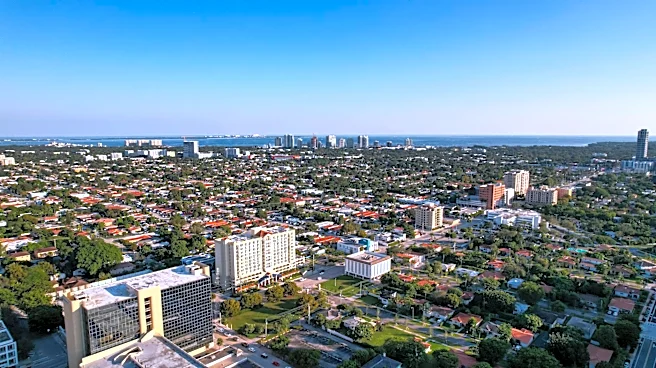
Miami, traditionally one of the most expensive cities for renters in the U.S., is experiencing a decline in rental prices. According to a report by Zumper, the median rent for a one-bedroom apartment in Miami has decreased by 4.1% compared to the previous
year, now standing at $2,590. This marks the largest decline among the top ten most expensive cities. Similarly, the median rent for a two-bedroom apartment has dropped by 5.4% year-over-year, now at $3,300. This trend is part of a broader correction following significant rent increases during the pandemic, where rents in Miami rose by 58% between 2020 and 2022. The decline in rent prices is attributed to an increase in multifamily housing construction, with Miami leading major cities in such developments relative to its total inventory. This construction boom could potentially lead to an oversupply, further driving down rental prices.
Why It's Important?
The decline in rental prices in Miami is significant for both current and prospective residents, as it may alleviate some of the financial burdens associated with living in one of the nation's most expensive rental markets. The trend reflects a broader shift in the housing market, where increased construction is beginning to balance out the high demand that drove prices up during the pandemic. However, despite the decrease in rents, housing affordability remains a critical issue, with Miami-Dade County reportedly short by approximately 90,000 affordable housing units. This shortage continues to push some residents to consider relocating outside the county or even the state. The situation underscores the ongoing challenges in addressing housing affordability, even as market corrections occur.
What's Next?
As Miami continues to see an increase in multifamily housing projects, the potential for an oversupply could further impact rental prices. This may lead to more competitive pricing and possibly more affordable housing options for residents. However, the challenge of affordable housing remains, and local policymakers and developers may need to focus on creating more affordable units to meet the demand. Additionally, the trend of declining rents may influence other cities facing similar affordability issues, potentially prompting a reevaluation of housing strategies and policies.