




What's Happening?
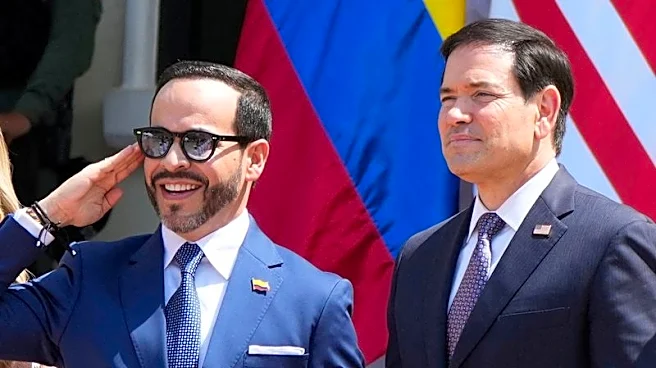
U.S. Rep. Mario Díaz-Balart raised concerns regarding the Trump administration's negotiations with the Castro family in Cuba. Díaz-Balart stated that there was no immunity agreement in place during these discussions and drew parallels between these talks
and those held with the Maduro regime. Following these negotiations, the Trump administration pivoted its strategy towards Cuba, implementing sanctions. These sanctions specifically targeted GAESA, a Cuban military-controlled conglomerate, and CUPET, the state oil company. Despite Washington's authorization for the sale of U.S. oil to private Cuban entities, the negotiations did not yield any significant progress, and no deals were ultimately finalized between the two nations. The shift from negotiation to sanctions indicates a change in the administration's approach to Cuban foreign policy.
Why It's Important?
This development is important as it highlights the complexities and shifting dynamics of U.S. foreign policy towards Cuba under the Trump administration. The questioning of negotiations by a U.S. Representative like Mario Díaz-Balart, particularly one with a strong stance on Cuban affairs, underscores potential internal disagreements or scrutiny within the U.S. government regarding its diplomatic efforts. The subsequent imposition of sanctions on key Cuban entities like GAESA and CUPET signifies a hardening of the U.S. stance, aiming to exert economic pressure. This approach can have significant implications for the Cuban economy, potentially limiting its access to international markets and resources, and affecting the daily lives of Cuban citizens. For U.S. businesses, the authorization of oil sales to private Cuban entities, even without finalized deals, suggests a potential, albeit limited, avenue for engagement that could be impacted by broader policy shifts.
What's Next?
The future trajectory of U.S.-Cuba relations remains uncertain following the Trump administration's shift from negotiations to sanctions. The lack of finalized deals despite authorized oil sales suggests a continued stalemate. Future administrations will need to decide whether to maintain the current sanctions, re-engage in negotiations, or pursue alternative diplomatic strategies. The impact of these sanctions on GAESA and CUPET will likely continue to be monitored, as their economic performance could influence future policy decisions. Stakeholders, including U.S. businesses interested in the Cuban market and Cuban-American communities, will be closely watching for any changes in policy that could affect trade, travel, and remittances. The ongoing political situation in Cuba, particularly regarding the Castro family's influence, will also play a crucial role in shaping the U.S. response.
Beyond the Headlines
Beyond the immediate policy shifts, this situation reflects a broader debate within U.S. foreign policy regarding engagement versus isolation as tools for promoting democratic change or influencing foreign governments. The comparison drawn by Rep. Díaz-Balart to negotiations with the Maduro regime in Venezuela suggests a concern about legitimizing authoritarian governments through dialogue without concrete concessions. The authorization of oil sales to private Cuban entities, while seemingly a step towards engagement, also highlights the intricate balance between supporting private enterprise and avoiding bolstering state-controlled entities in a communist system. This delicate balance often leads to internal policy contradictions and challenges in achieving stated foreign policy objectives, raising ethical questions about the effectiveness and moral implications of different diplomatic approaches.