






What's Happening?
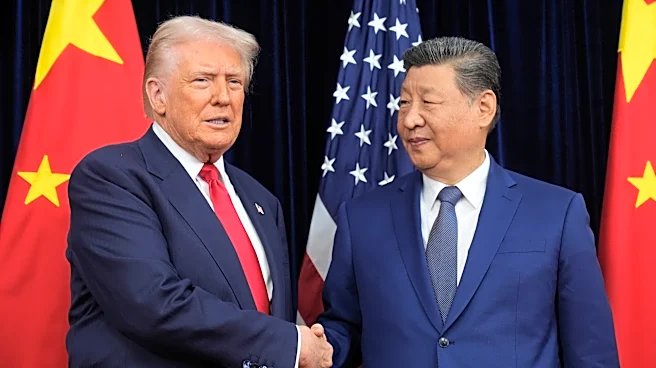
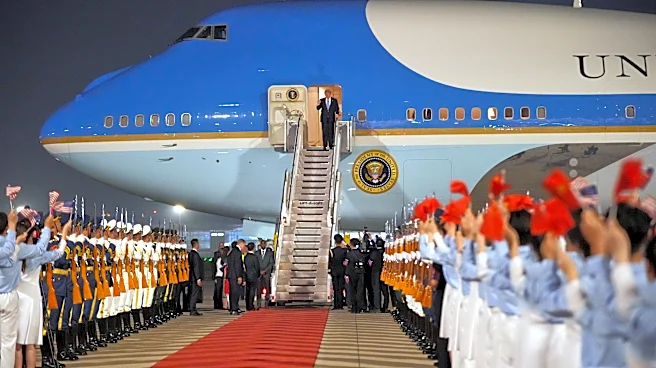
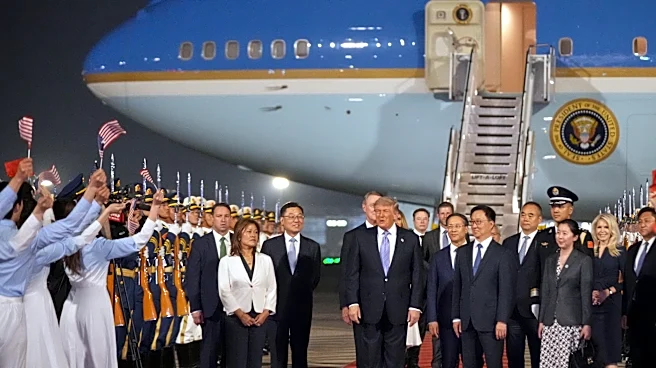
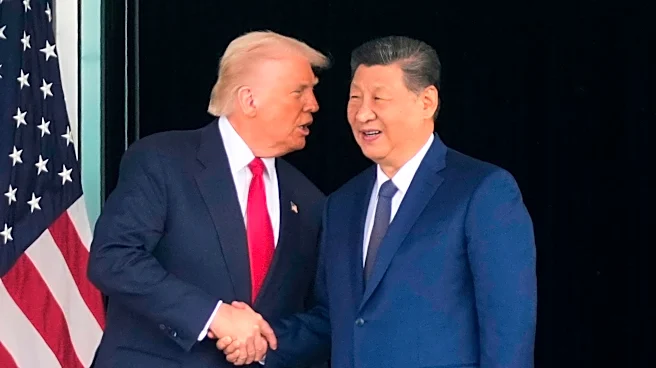
President Donald Trump's visit to China is characterized by efforts to promote American business interests in a market dominated by Chinese manufacturing and innovation. Despite the presence of major U.S. brands like Tesla and Apple, American companies
face stiff competition from Chinese firms, which benefit from state support and a strong supply chain. The visit aims to address trade imbalances and encourage Chinese market openness, but challenges persist due to China's advanced manufacturing capabilities and protectionist policies. The summit also highlights the strategic importance of sectors like electric vehicles and AI, where China has established a leading position.
Why It's Important?
The visit highlights the complexities of U.S.-China trade relations, with significant implications for global economic dynamics. As China continues to expand its manufacturing and technological capabilities, U.S. companies face increasing pressure to compete in a rapidly evolving market. The outcome of the summit could influence future trade policies and impact industries reliant on Chinese manufacturing, such as technology and automotive. Additionally, the visit underscores the strategic importance of maintaining a balance between economic cooperation and competition in the global market.
What's Next?
The summit may lead to discussions on potential trade agreements and increased Chinese imports of U.S. agricultural products. However, significant challenges remain, particularly in sectors like technology and aviation, where U.S. companies face restrictions and competition from Chinese counterparts. The visit could set the stage for future negotiations aimed at addressing trade imbalances and fostering economic cooperation, but the path forward will require careful navigation of complex geopolitical dynamics.