

What's Happening?
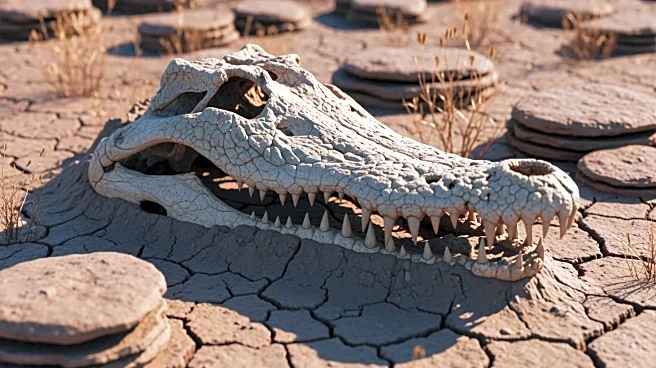
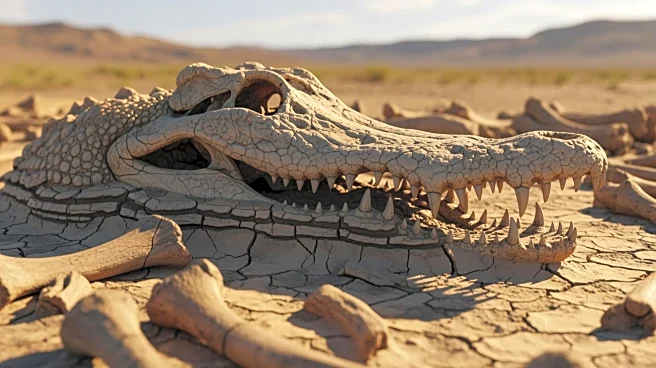
Researchers have identified a previously unknown species of large crocodile, Crocodylus lucivenator, in the Hadar formation in Ethiopia. This species, dubbed 'Lucy's hunter,' lived between 3.4 to 3 million years ago, coexisting with early hominins such
as Australopithecus afarensis. The crocodile, which could reach lengths of up to five meters, was an ambush predator, posing a significant threat to hominins who needed to access water sources. The discovery was made by Nathan Platt, Daniel Leaphart, and colleagues, and published in the Journal of Systematic Palaeontology. The study suggests that Crocodylus lucivenator was the dominant crocodile species in its region, unlike other areas where multiple crocodile species coexisted.
Why It's Important?
The identification of Crocodylus lucivenator provides insight into the challenges faced by early hominins in their environment. Understanding predator-prey dynamics during the Pliocene era can shed light on the evolutionary pressures that shaped human ancestors. The presence of such a formidable predator likely influenced hominin behavior, survival strategies, and possibly even evolutionary adaptations. This discovery adds to the understanding of the ecological landscape in which early humans evolved, highlighting the role of large predators in shaping the evolutionary path of hominins.