

What's Happening?
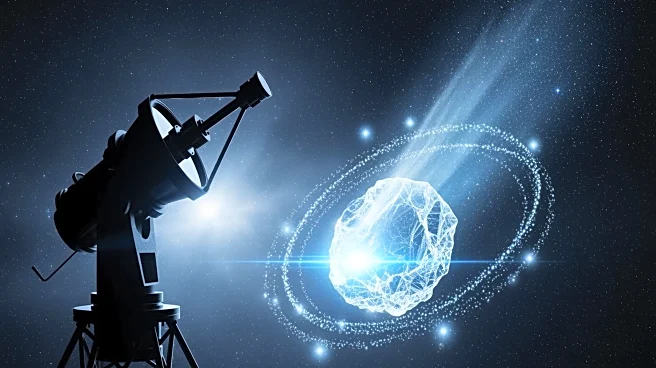
A small asteroid, designated 2026 FM3, passed close to Earth on March 24-25, 2026. The asteroid, approximately the size of a car, was detected by astronomers using a telescope in California just days before its closest approach. It traveled at a speed
of over 11,000 miles per hour and came within 147,000 miles of Earth, which is closer than the distance to the moon. Despite its proximity, experts confirmed that the asteroid posed no threat to the planet. Such close encounters are common, with many smaller asteroids passing by Earth unnoticed. These events provide scientists with valuable opportunities to study the movement and composition of near-Earth objects, which is crucial for improving planetary defense systems.
Why It's Important?
The close passage of asteroid 2026 FM3 underscores the importance of monitoring near-Earth objects for planetary defense. By studying these asteroids, scientists can better understand their trajectories and physical properties, which is essential for predicting and mitigating potential future threats. The ability to detect and track such objects is vital for developing strategies to protect Earth from larger asteroids that could cause significant damage. This event highlights the ongoing efforts by NASA and other space agencies to enhance their detection capabilities and improve response plans for potential asteroid impacts.
What's Next?
Continued advancements in telescope technology and tracking systems are expected to improve the detection of near-Earth objects. NASA and other space agencies will likely increase their focus on identifying and monitoring asteroids that could pose a threat in the future. Public awareness and education about asteroid impacts and planetary defense measures may also be emphasized to ensure preparedness for any potential threats. Collaborative international efforts may be strengthened to share data and resources for global asteroid monitoring and defense initiatives.