





What's Happening?
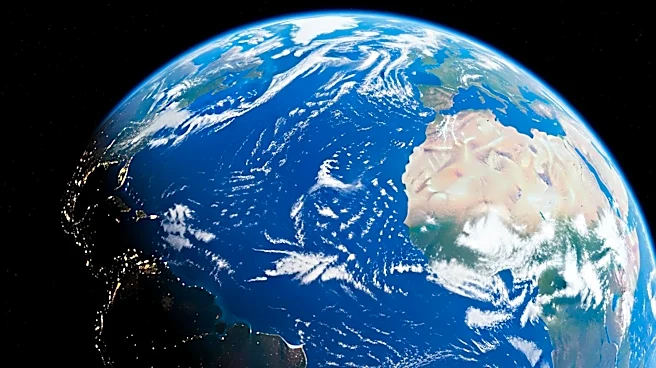
NASA's Plankton, Aerosol, Cloud, and ocean Ecosystem (PACE) Validation Science Teams (PVST) have collaborated with the Schmidt Ocean Institute and the Symbiotic Partners and Asgard Research Cruise (SPARC) to conduct research off the coast of Uruguay.
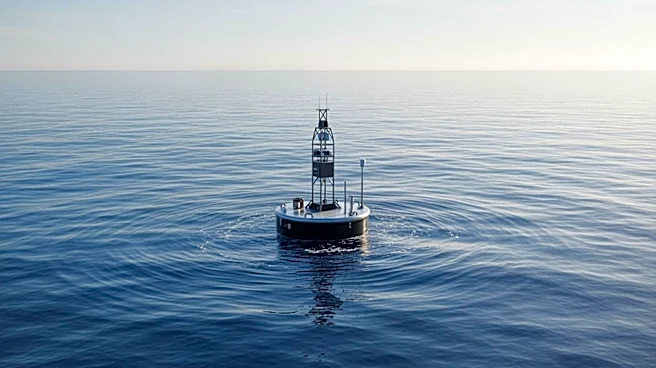
This expedition, which took place from mid-November to early December 2025, aimed to gather data to validate the PACE Ocean Color Instrument's parameters. The research focused on measuring particulate organic carbon, phytoplankton pigments, and surface ocean optical properties. These efforts are crucial for understanding the ocean's biological and chemical processes and for improving satellite data accuracy. The expedition also involved studying archaea, microorganisms believed to be ancestors of eukaryotes, to better understand their role in ocean ecosystems.
Why It's Important?
This research is significant as it enhances the accuracy of satellite data used to monitor ocean health and climate change. By validating satellite observations with direct measurements, scientists can improve models that predict oceanic and atmospheric conditions. This has implications for climate science, as accurate data is essential for understanding global warming and its effects on marine ecosystems. The collaboration also highlights the importance of international partnerships in advancing scientific knowledge. The data collected will aid in the study of microbial communities, contributing to our understanding of biodiversity and the evolutionary history of life on Earth.
What's Next?
The data collected during this expedition will be analyzed and shared with the NASA data repository for further validation efforts. Continued collaboration between NASA and international research teams is expected to enhance the understanding of oceanic processes and improve satellite monitoring capabilities. Future expeditions may focus on other understudied regions to expand the dataset and refine satellite models. The ongoing exchange of data with the SPARC team will also contribute to research on eukaryotic origins and microbial ecology.