





What's Happening?
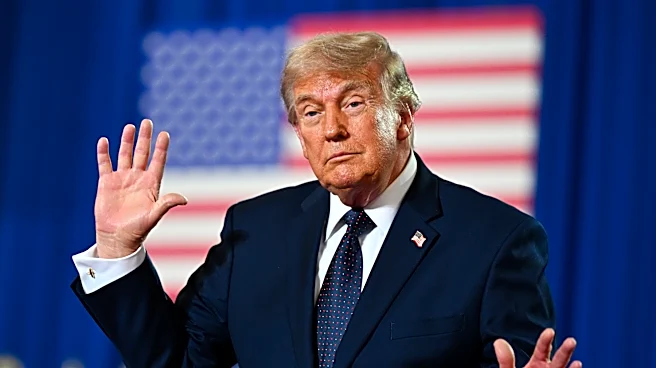
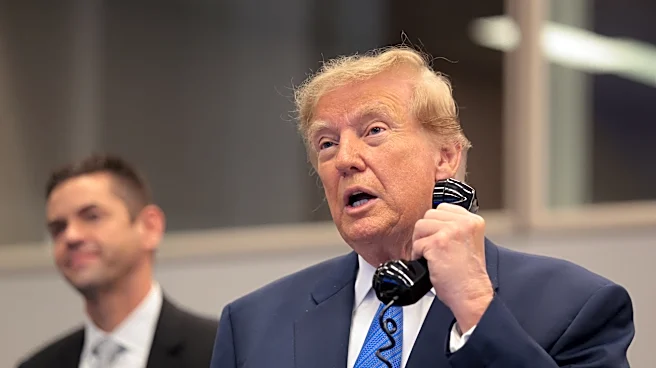
President Donald Trump has threatened to report NBC News' 'Meet the Press' host Kristen Welker to the Federal Communications Commission (FCC) for "rebuke or punishment." This threat follows Welker's characterization of Trump's political endorsements as yielding
"mixed results." Trump, in a post on Truth Social, disputed this assessment, claiming a 100% success rate for his endorsed U.S. Senate candidates and 98% for U.S. House candidates, with an overall success rate of 99%. He cited recent victories by Darline Graham (R-S.C.) and Mike Mazzei as examples of his successful endorsements that he believes received insufficient media coverage. Trump labeled Welker's comment as a "purposeful inaccuracy" and accused the broader news media of attempting to "harass, demean, and libel anything ‘TRUMP.’" He urged FCC Chairman Brendan Carr and the commission to address what he called a "Threat to our Country." NBC News has defended Welker, with a spokesperson stating, "Kristen is one of the best in the business and we stand by her."
Why It's Important?
This incident highlights ongoing tensions between President Trump and major news organizations, particularly concerning media coverage of his political activities and endorsements. The threat of FCC action against a news outlet raises questions about press freedom and the role of government agencies in regulating broadcast content. While the FCC primarily oversees broadcast licenses and can address complaints regarding content standards, direct intervention based on perceived political bias is a contentious area. Such threats can create a chilling effect on journalistic reporting, potentially influencing how media outlets cover political figures. For the public, it underscores the polarized media landscape and the challenges in discerning objective reporting amidst strong political rhetoric. The involvement of a large media conglomerate like Comcast Corp., which owns NBC News, also brings corporate interests into the political spotlight, as they navigate pressures from political figures while upholding journalistic integrity.
What's Next?
The immediate next step would likely involve the FCC's response to President Trump's threatened report. FCC Chairman Brendan Carr and the commission will need to decide whether to formally investigate the complaint, which could lead to a public statement or a more formal inquiry. NBC News is expected to continue defending Kristen Welker and its journalistic practices. This situation could escalate into a broader debate about media regulation, freedom of the press, and the boundaries of political criticism. It may also prompt other media organizations to re-evaluate their coverage strategies in anticipation of similar reactions from political figures. Depending on the FCC's stance, this could set a precedent for how future complaints against news outlets are handled, potentially influencing the relationship between political power and media accountability in the U.S.
Beyond the Headlines
Beyond the immediate dispute, this event touches upon deeper issues regarding media trust and the perception of bias in news reporting. President Trump's repeated accusations against news organizations, labeling them as biased or a "threat to democracy," contribute to a climate of distrust in established media institutions. This erosion of trust can have significant societal implications, making it harder for the public to access and agree upon factual information, which is crucial for a functioning democracy. The incident also reflects the increasing weaponization of regulatory bodies, or the threat thereof, as tools in political discourse. The concept of "public airwaves" and the responsibilities of broadcasters, as invoked by President Trump, could become a focal point for discussions on media ethics and accountability, potentially leading to calls for re-evaluating existing media regulations or the development of new frameworks to address perceived imbalances in reporting.