








What's Happening?
The International Air Transport Association (IATA) has announced a commitment to work more closely with the International Civil Aviation Organization (ICAO) to enhance transparency and integrity in tracking sustainable aviation fuels (SAF). This collaboration
aims to support the aviation industry's goal of achieving net-zero carbon emissions by 2050. The announcement was made during ICAO Aviation Climate Week, ahead of the IATA Annual General Meeting in Rio de Janeiro. The partnership will focus on developing robust systems and high-quality data to track the use of SAF and its contribution to emissions reduction.
Why It's Important?
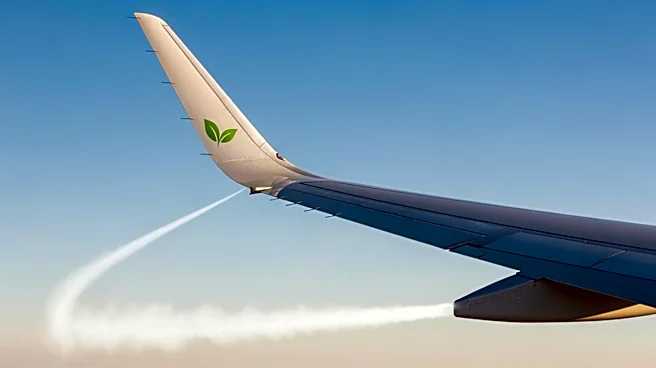
The aviation industry is under increasing pressure to reduce its carbon footprint, and sustainable aviation fuels are seen as a critical component in achieving this goal. By collaborating with ICAO, IATA aims to ensure credible tracking of SAF usage, which is essential for building trust among stakeholders and accelerating the deployment of cleaner energy solutions. This partnership could set a precedent for other industries to follow, demonstrating the importance of transparency and cooperation in addressing global environmental challenges. The initiative also highlights the strategic importance of SAF in reducing reliance on traditional jet fuels and enhancing energy security.
What's Next?
As IATA and ICAO work together to implement their SAF tracking systems, the aviation industry will likely see increased investment in SAF production and infrastructure. This could lead to more widespread adoption of SAF, helping airlines meet their emissions reduction targets. The collaboration may also influence regulatory frameworks, encouraging governments to support SAF initiatives through policy and financial incentives. The success of this partnership could pave the way for similar collaborations in other sectors, promoting sustainable practices across industries.