






What's Happening?
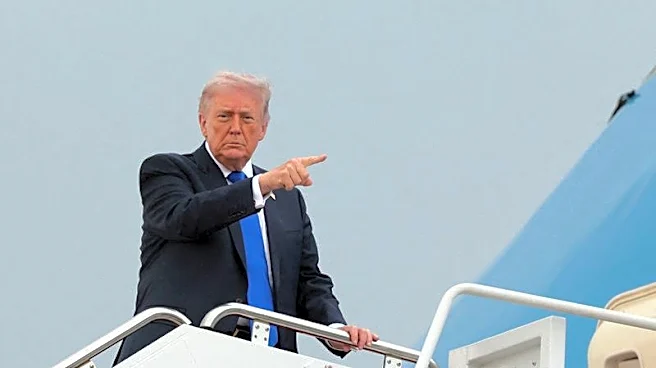
In Georgia, the influence of President Trump's false claims about the 2020 presidential election continues to impact the political landscape, particularly in the GOP runoffs. Despite multiple recounts affirming President Joe Biden's victory in Georgia, Trump's assertions
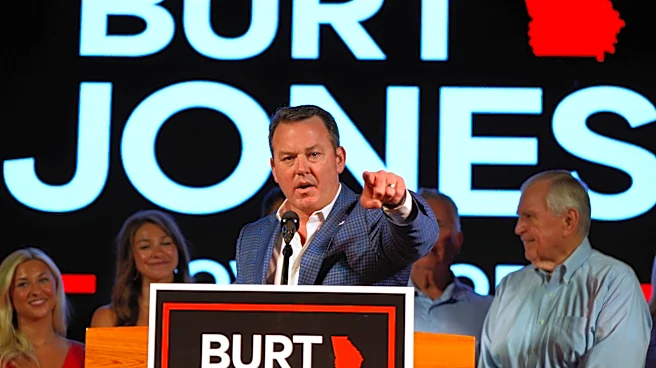
of widespread fraud have persisted, affecting the selection of nominees for key positions such as governor, secretary of state, and the U.S. Senate. Candidates aligned with Trump, including those who supported his efforts to overturn the election results, have gained traction within the Republican Party. This includes Burt Jones, a former state lawmaker and Trump loyalist, who has received Trump's endorsement in the governor's race. The ongoing focus on the 2020 election results has sparked concerns among some conservatives about potential backlash from the general electorate.
Why It's Important?
The continued emphasis on the 2020 election by Trump and his supporters highlights a significant division within the Republican Party. While aligning with Trump may bolster support among the GOP base, it risks alienating moderate voters and could impact the party's performance in the general elections. The situation underscores the broader challenge for the Republican Party in balancing loyalty to Trump with the need to appeal to a wider electorate. The focus on past election grievances rather than future policy issues could have implications for the party's strategy and success in upcoming elections, particularly in battleground states like Georgia.
What's Next?
As the runoff campaigns progress, candidates will need to navigate the complex dynamics of appealing to both Trump loyalists and a broader voter base. The outcome of these races could influence the Republican Party's approach to future elections and its ability to unify around a cohesive platform. Additionally, the ongoing scrutiny of election processes in Georgia, particularly in Fulton County, may lead to further legal and political challenges. The results of the runoffs will be closely watched as an indicator of Trump's enduring influence within the party and its potential impact on the 2024 presidential election.