





What's Happening?
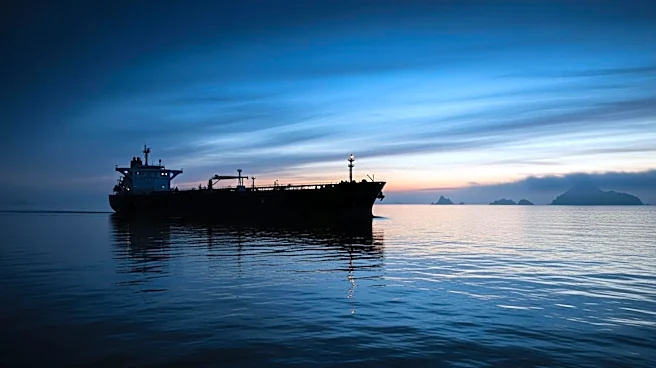
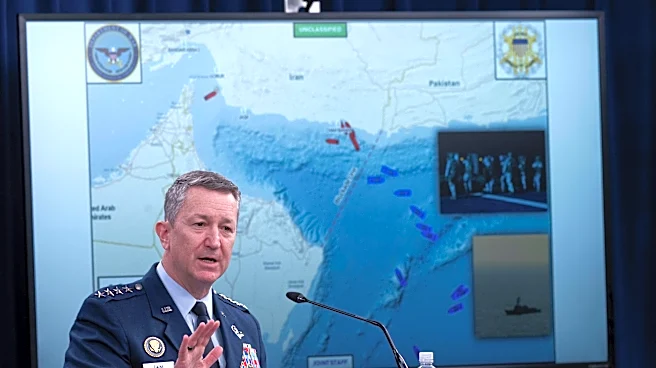
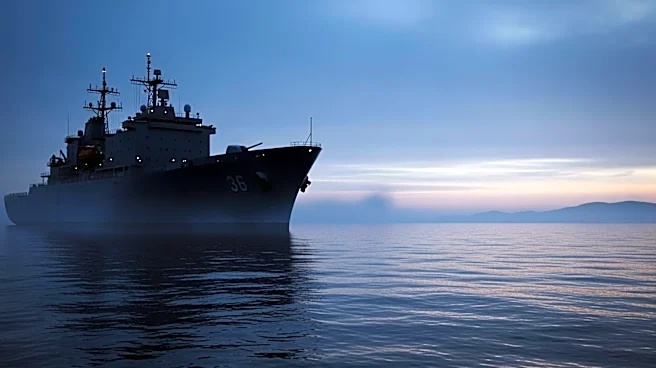
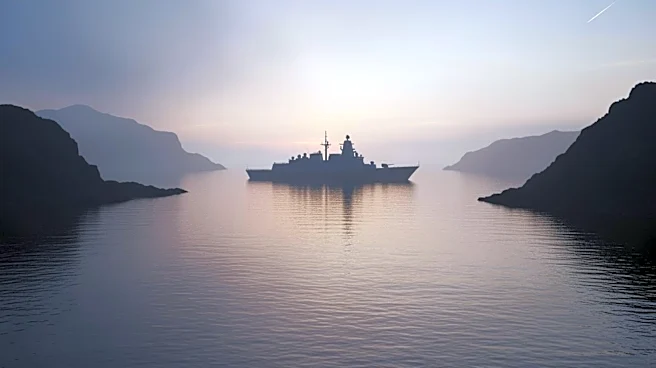
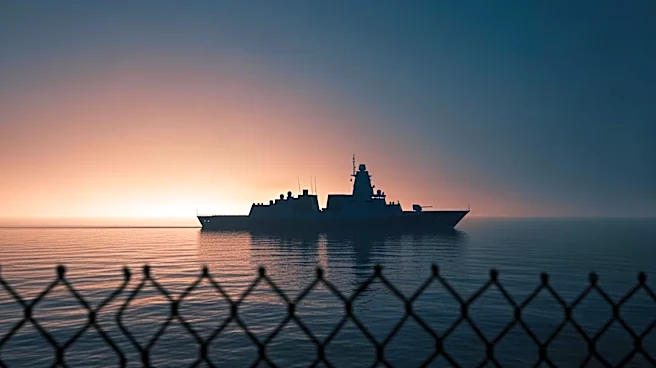
The U.S. Navy has initiated a blockade of the Strait of Hormuz, aiming to cut off Iran's oil exports and increase economic pressure on the country. This move follows weeks of U.S. military strikes that have not led to a resolution of the conflict on Washington's
terms. The blockade is intended to intercept vessels entering or leaving Iranian ports, while allowing free navigation for ships from other Persian Gulf ports. The operation is part of a broader strategy to weaken Iran's economy by targeting its oil revenue.
Why It's Important?
The blockade of the Strait of Hormuz is a significant escalation in U.S.-Iran tensions, as the strait is a critical chokepoint for global oil shipments. The operation could disrupt international oil markets, potentially leading to increased oil prices and economic instability. The blockade also raises questions about the sustainability and effectiveness of such military actions, given the logistical challenges and historical difficulties associated with enforcing naval blockades.
What's Next?
The U.S. Navy will need to maintain a substantial presence in the region to enforce the blockade, which may lead to increased military expenditures and potential confrontations with Iranian forces. The international community may respond with diplomatic efforts to de-escalate tensions and find a peaceful resolution. The effectiveness of the blockade in achieving U.S. objectives will be closely monitored, as will its impact on global oil markets.