
What's Happening?
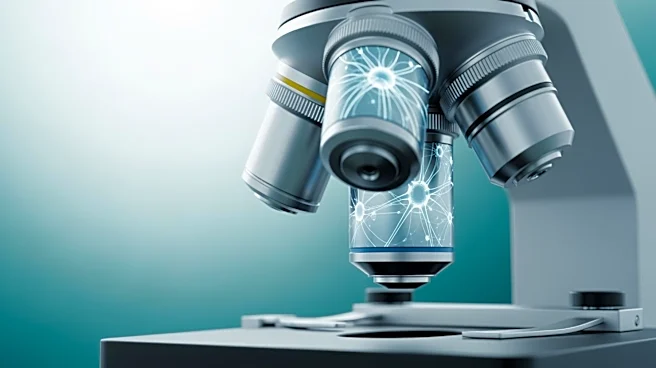
MIT researchers have discovered a phenomenon where laser light can self-organize into a focused 'pencil beam' under specific conditions. This discovery could revolutionize bioimaging by providing faster
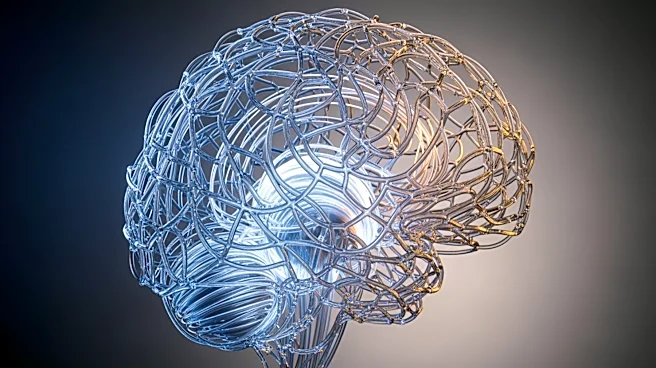
and higher-resolution images than current technologies. The pencil beam was used to capture 3D images of the human blood-brain barrier, showing individual cells absorbing drugs in real-time. This advancement could significantly aid in the development of therapies for neurodegenerative diseases by allowing scientists to test drug delivery to the brain more effectively.
Why It's Important?
This breakthrough in laser technology has the potential to transform medical imaging and drug development. By enabling real-time visualization of drug interactions within the brain, it could accelerate the development of treatments for conditions like Alzheimer's and ALS. The ability to observe how drugs penetrate the blood-brain barrier and interact with brain cells could lead to more effective therapies and a better understanding of neurological diseases. This innovation also demonstrates the potential of optical physics in advancing healthcare technologies.