
What's Happening?
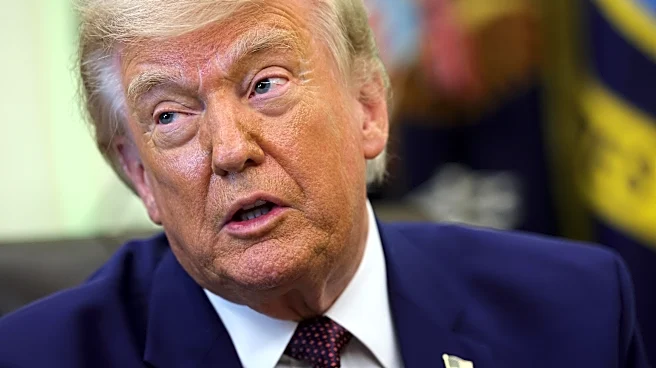
President Trump has proposed new tariffs on imports from 60 countries, accusing them of failing to curb forced labor. The tariffs, ranging from 10% to 12.5%, are part of a broader trade strategy by the Trump administration
to address unfair trade practices. However, experts and human rights organizations argue that these tariffs are unlikely to effectively combat modern slavery and may even exacerbate the issue. The European Commission and the International Chamber of Commerce have expressed concerns about the arbitrary nature of these tariffs. Critics argue that the tariffs are more about trade volumes and geopolitical considerations than addressing the severity of forced labor exploitation. The U.S. is among the top 10 countries with the largest number of people living in modern slavery, according to the international human rights group Walk Free.
Why It's Important?
The imposition of these tariffs could have significant implications for international trade relations and the global supply chain. While intended to address forced labor, the tariffs may strain relationships with key trading partners and disrupt supply chains, potentially leading to increased costs for businesses and consumers. The European Union, a major trading partner, has criticized the tariffs as unjustified, highlighting a potential trade conflict. Additionally, the effectiveness of tariffs as a tool to combat forced labor is questioned, as they may not address the root causes of the issue and could lead to political resistance in affected countries. This development underscores the complexity of using trade policy to address human rights issues.
What's Next?
The proposed tariffs are likely to face scrutiny and potential pushback from international trade partners and human rights organizations. The European Union's Forced Labour Regulation, set to take effect in December 2027, may offer a more comprehensive approach to addressing forced labor, potentially influencing future U.S. policy. Businesses affected by the tariffs will need to navigate the changing trade landscape and assess the impact on their supply chains. The ongoing debate over the effectiveness of tariffs in addressing forced labor may prompt further discussions on alternative strategies to combat modern slavery.