
What's Happening?
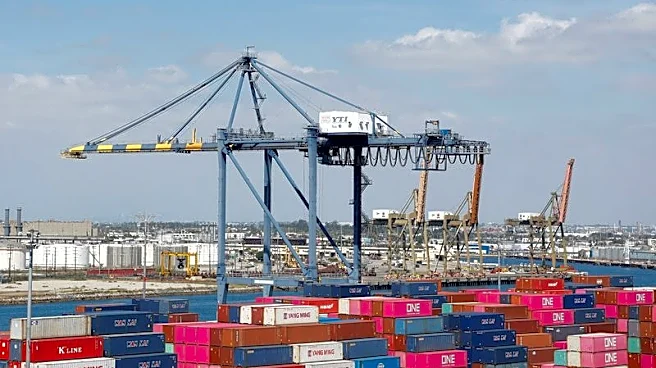
The U.S. Court of International Trade is currently reviewing the legality of President Donald Trump's temporary 10 percent global tariffs. These tariffs were imposed following the Supreme Court's decision
to strike down his previous, more extensive tariffs. The legal basis for these tariffs is Section 122 of the Trade Act of 1974, which allows the president to impose global tariffs of up to 15% for 150 days without congressional approval. The court is examining whether this statute is applicable in the current economic context. The tariffs, which are set to expire on July 24, have been challenged by two dozen states and several businesses. The court's decision will hinge on the interpretation of terms like 'balance-of-payments deficits' as used in the Trade Act of 1974.
Why It's Important?
The outcome of this case could have significant implications for U.S. trade policy and the executive branch's authority in imposing tariffs. If the court upholds the tariffs, it could set a precedent for future administrations to use Section 122 to address trade deficits without needing congressional approval. This could lead to more unilateral trade actions by the executive branch, potentially affecting international trade relations and economic stability. Conversely, if the court rules against the tariffs, it could limit the president's ability to impose such measures, reinforcing the need for legislative oversight in trade matters. The decision will impact businesses and states that are currently affected by these tariffs, influencing their economic strategies and operations.
What's Next?
The court's decision is expected soon, given the temporary nature of the tariffs. If the court rules in favor of the tariffs, President Trump may choose to extend them beyond the initial 150 days, subject to congressional approval. This could lead to further legal challenges and political debates over trade policy. If the court rules against the tariffs, it may prompt the administration to seek alternative measures to address trade deficits. The decision will likely influence future trade negotiations and the U.S.'s approach to international economic relations.