



What's Happening?
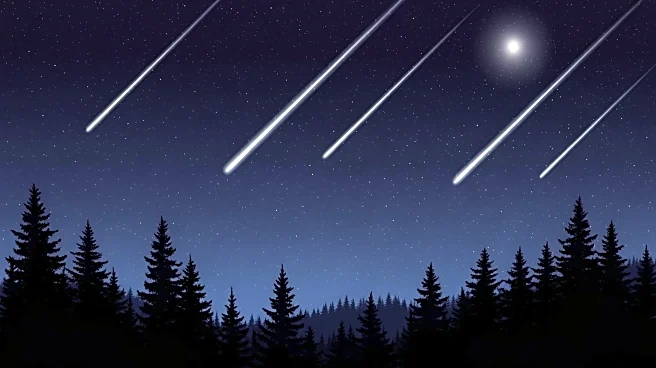
The annual Geminids meteor shower is set to peak tonight, providing a dazzling display of meteors streaking across the night sky. According to NASA, the Geminids can produce up to 120 meteors per hour, making it one of the most prolific meteor showers
of the year. The shower originates from the asteroid 3200 Phaethon, a celestial body that scientists are still studying to understand its unique characteristics. Unlike most meteor showers that come from comets, the Geminids' asteroid origin makes it a subject of particular interest. The best viewing conditions are expected in the Northern Hemisphere, though the shower will also be visible in the Southern Hemisphere.
Why It's Important?
The Geminids meteor shower is significant not only for its visual spectacle but also for its scientific implications. The shower's origin from an asteroid rather than a comet challenges traditional understandings of meteor showers and provides a unique opportunity for scientific study. Observing the Geminids can yield insights into the composition and behavior of asteroids, contributing to broader astronomical research. Additionally, the event serves as a public engagement tool, sparking interest in space science and encouraging educational activities related to astronomy. The widespread visibility of the shower allows for a shared experience that can inspire future generations of scientists and enthusiasts.
What's Next?
Following the peak of the Geminids, astronomers will analyze data collected during the event to further understand the properties of asteroid 3200 Phaethon. This research may lead to new discoveries about the nature of asteroids and their potential impact on Earth. Public interest generated by the meteor shower could also lead to increased participation in astronomy-related activities and educational programs. As the event concludes, the focus will shift to preparing for future astronomical events and continuing the study of celestial phenomena.